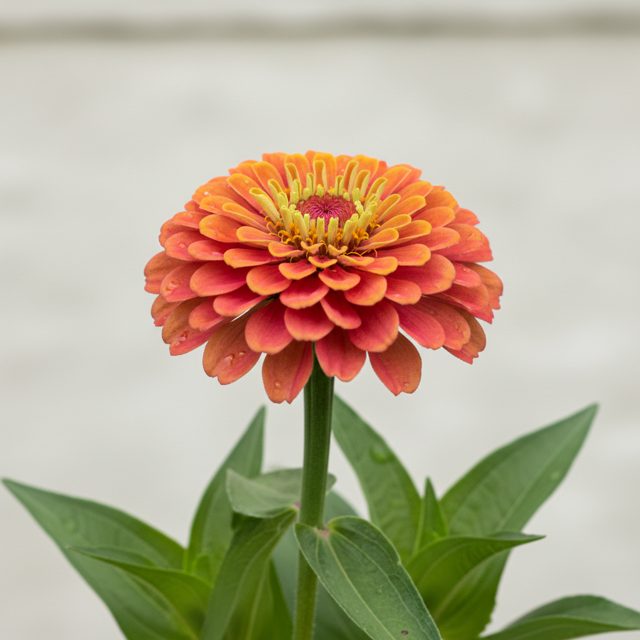
- Scientific name
- Zinnia elegans
- Family
- Asteraceae
- Also known as
- Youth-and-old-age, Common Zinnia
- Category
- Flowers
- Care difficulty
- Easy
- Pet safety
- Non-toxic to cats and dogs
How to care for zinnia
- Light: Requires full sun, at least 6-8 hours of direct sunlight daily, for abundant flowering. Less sun leads to fewer blooms and leggy growth.
- Water: Water deeply and regularly, especially during dry spells, to keep the soil consistently moist. Avoid overhead watering to prevent mildew.
- Soil: Prefers well-draining, fertile soil rich in organic matter. They are not particular about soil pH but avoid heavy, poorly draining clay.
- Temperature: Thrives in warm temperatures, typically above 60°F (15°C). They are sensitive to frost and should be planted after the last frost date.
- Humidity: Average outdoor humidity is suitable. Good air circulation helps prevent fungal diseases.
- Fertilizer: Amend soil with compost at planting; a balanced granular fertilizer can be applied once a month for continuous blooms. Avoid excessive nitrogen.
- Propagation: Easily propagated from seeds directly sown outdoors after the last frost. They germinate quickly and grow rapidly.
Is zinnia toxic to pets?
Pet-safe. Non-toxic to cats, dogs, and humans. See our guide to toxic plants for cats and dogs.
Common problems
- Powdery mildew: Plant resistant varieties, ensure good air circulation, and water at the base of the plant.
- Aphids: Spray affected plants with insecticidal soap or a strong stream of water to dislodge pests.
Did you know?
Zinnias are excellent 'cut-and-come-again' flowers; the more you cut them for bouquets, the more they will bloom.
Let PlantBetter help
Snap a photo with PlantBetter to confirm your plant is a zinnia, spot problems early and get care reminders tailored to your home.