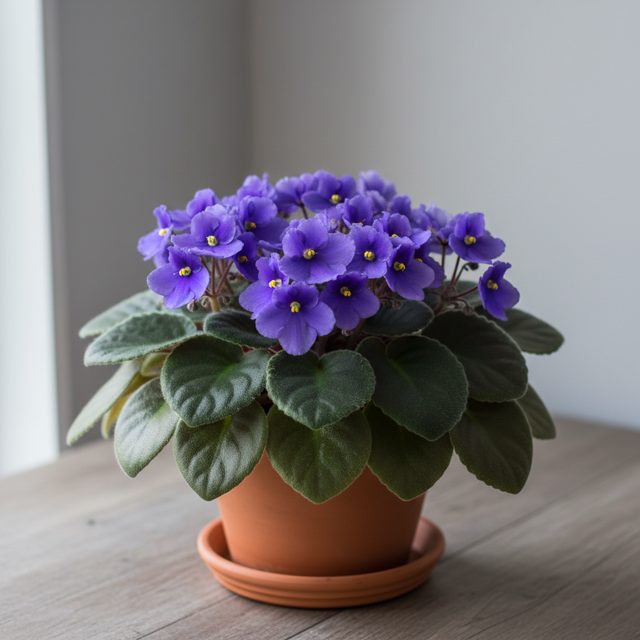
- Scientific name
- Saintpaulia spp.
- Family
- Gesneriaceae
- Also known as
- Cape Marigold
- Category
- Flowers
- Care difficulty
- Easy
- Pet safety
- Non-toxic to cats and dogs
How to care for african violet
- Light: Requires bright, indirect light; direct sun can scorch leaves. East-facing windows are often ideal.
- Water: Water from the bottom or carefully at the soil line with room-temperature water. Keep soil consistently moist but never soggy.
- Soil: Prefers a light, airy, well-draining potting mix specifically formulated for African Violets. Avoid heavy, dense soils.
- Temperature: Thrives in stable room temperatures between 65-75°F (18-24°C). Avoid cold drafts and sudden temperature drops.
- Humidity: Benefits from moderate to high humidity, ideally 50% or higher. Use a pebble tray or humidifier.
- Fertilizer: Feed every 2-4 weeks during blooming with a specialized African Violet fertilizer. Dilute to half strength.
- Propagation: Easily propagated from leaf cuttings. Place a leaf stem in water or moist potting mix, and new plantlets will emerge.
Is african violet toxic to pets?
Pet-safe. Non-toxic to cats, dogs, and humans. See our guide to toxic plants for cats and dogs.
Common problems
- Crown rot: Caused by overwatering or cold water; ensure proper watering techniques and use room-temperature water.
- Foliar spotting: Caused by cold water on leaves; water carefully at the base or from the bottom.
Did you know?
The genus Saintpaulia was named after Walter von Saint Paul-Illaire, who first discovered the plant in Tanzania in 1892.
Let PlantBetter help
Snap a photo with PlantBetter to confirm your plant is a african violet, spot problems early and get care reminders tailored to your home.