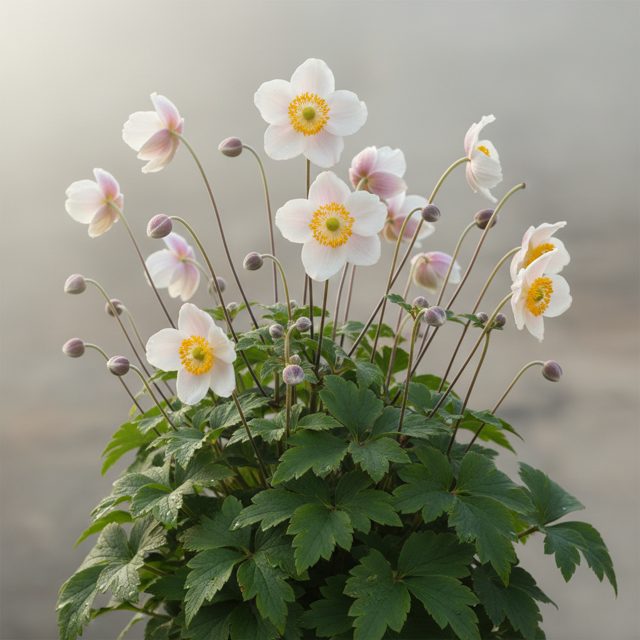
- Scientific name
- Anemone spp.
- Family
- Ranunculaceae
- Also known as
- Windflower, Poppy Anemone
- Category
- Flowers
- Care difficulty
- Moderate
- Pet safety
- Toxic to pets
How to care for anemone
- Light: Prefers full sun to partial shade, depending on the species. Many spring-blooming varieties prefer sun; fall-blooming types often do better with some shade.
- Water: Keep soil consistently moist but not waterlogged, especially during active growth and flowering. Reduce watering after dormancy.
- Soil: Thrives in well-draining, humus-rich soil. A neutral to slightly alkaline pH is generally preferred.
- Temperature: Varies by species; many are hardy in USDA zones 4-8. Some prefer cool springs, others bloom in fall.
- Humidity: Tolerates average humidity. Good air circulation is beneficial.
- Fertilizer: Apply a balanced, slow-release fertilizer in early spring as new growth emerges. A light feeding of compost can also be beneficial.
- Propagation: Propagated by division of rhizomes or corms in late summer or early fall. Some species can be grown from seed.
Is anemone toxic to pets?
Not pet-safe. Anemone plants are considered toxic to cats, dogs, and humans, causing gastrointestinal upset if ingested. See our guide to toxic plants for cats and dogs.
Common problems
- Lack of flowering or weak growth: Ensure appropriate light conditions for the species. Check for proper planting depth and soil drainage.
- Fungal diseases like powdery mildew: Improve air circulation, avoid overhead watering, and ensure plants are not overcrowded.
Did you know?
The name Anemone comes from the Greek word 'anemos', meaning 'wind', which is why they are often called Windflowers.
Let PlantBetter help
Snap a photo with PlantBetter to confirm your plant is a anemone, spot problems early and get care reminders tailored to your home.