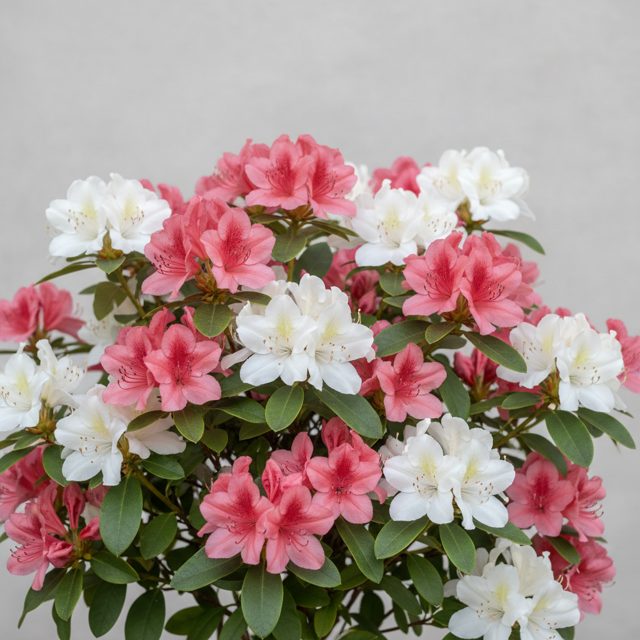
- Scientific name
- Rhododendron spp.
- Family
- Ericaceae
- Also known as
- Rhododendron
- Category
- Flowers
- Care difficulty
- Moderate
- Pet safety
- Toxic to pets
How to care for azalea
- Light: Prefers partial shade, especially protection from intense afternoon sun. Some varieties can tolerate more sun in cooler climates.
- Water: Keep the soil consistently moist but well-drained, especially during blooming and dry periods. Avoid letting the soil dry out completely.
- Soil: Requires acidic, well-draining soil rich in organic matter. A pH between 4.5 and 6.0 is ideal.
- Temperature: Hardy in many zones, but generally prefers cooler temperatures, around 60-75°F (15-24°C). Protect from extreme heat or frost.
- Humidity: Benefits from moderate to high humidity, especially during hot, dry spells. Mulching can help retain soil moisture.
- Fertilizer: Fertilize in spring after flowering with an acid-loving plant fertilizer. Avoid over-fertilizing.
- Propagation: Propagate primarily through stem cuttings taken in early summer. Softwood cuttings root best with rooting hormone.
Is azalea toxic to pets?
Not pet-safe. Highly toxic to cats, dogs, and humans; ingestion can cause vomiting, diarrhea, cardiac issues, and death. See our guide to toxic plants for cats and dogs.
Common problems
- Yellow leaves with green veins (chlorosis): Indicates iron deficiency, often due to high soil pH; use an acidic fertilizer or iron supplement.
- Lace bugs: Cause stippling on leaves; treat with insecticidal soap or horticultural oil, focusing on the undersides of leaves.
Did you know?
Despite their beautiful appearance, azaleas are members of the Rhododendron genus, which includes many toxic plants.
Let PlantBetter help
Snap a photo with PlantBetter to confirm your plant is a azalea, spot problems early and get care reminders tailored to your home.