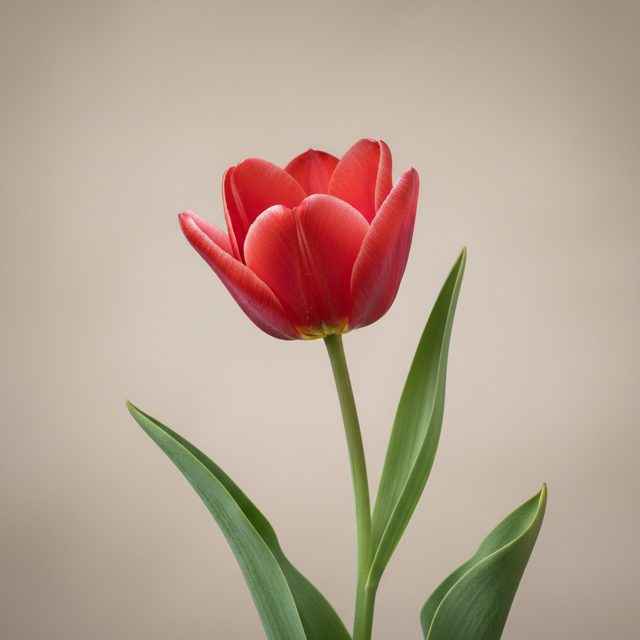
- Scientific name
- Tulipa spp.
- Family
- Liliaceae
- Also known as
- Garden Tulip
- Category
- Flowers
- Care difficulty
- Easy
- Pet safety
- Toxic to pets
How to care for tulip
- Light: Requires full sun (at least 6 hours direct sunlight daily) for best growth and flowering. They can tolerate partial shade, but blooms may be less vibrant and long-lasting.
- Water: Water regularly when first planted and during active growth in spring if rainfall is insufficient. Keep soil consistently moist but never waterlogged; reduce watering after flowering as foliage dies back.
- Soil: Prefers well-draining, moderately fertile soil, ideally sandy loam, with a neutral to slightly acidic pH. Avoid heavy clay soils which can lead to rot.
- Temperature: Requires a cold dormancy period (vernalization) of 12-16 weeks below 55°F (13°C) to flower. Ideal growing temperatures are cool in spring.
- Humidity: Tolerates average outdoor humidity. High humidity combined with poor air circulation can encourage fungal diseases.
- Fertilizer: Fertilize with a low-nitrogen, high-phosphorus bulb food when planting in fall, or a balanced granular fertilizer when shoots emerge in spring. Avoid high-nitrogen fertilizers.
- Propagation: Propagated by offsets (daughter bulbs) that form at the base of the main bulb. These can be separated and replanted when the parent bulb is dormant.
Is tulip toxic to pets?
Not pet-safe. Contains allergenic lactones that can cause vomiting, diarrhea, depression, and drooling in pets, particularly if the bulb is ingested. Can cause skin irritation in humans. See our guide to toxic plants for cats and dogs.
Common problems
- Lack of flowering ('blind' bulbs): Ensure proper cold dormancy, sufficient light, and well-draining soil. Consider lifting and storing bulbs correctly for replanting.
- Bulb rot: Plant in well-draining soil, avoid overwatering, and ensure bulbs are not planted too deep in heavy soil.
Did you know?
During the 17th century, 'Tulip Mania' gripped the Netherlands, leading to exorbitant prices for tulip bulbs, which became a speculative commodity.
Let PlantBetter help
Snap a photo with PlantBetter to confirm your plant is a tulip, spot problems early and get care reminders tailored to your home.