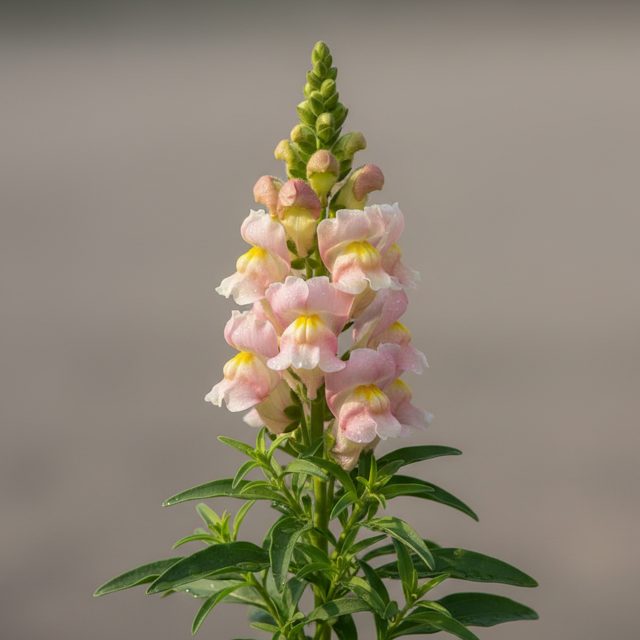
- Scientific name
- Antirrhinum majus
- Family
- Plantaginaceae
- Also known as
- Dog Flower, Calf's Snout
- Category
- Flowers
- Care difficulty
- Easy
- Pet safety
- Non-toxic to cats and dogs
How to care for snapdragon
- Light: Requires full sun, at least 6-8 hours of direct sunlight daily, for the best and most abundant blooms. Some partial shade is tolerated in very hot climates.
- Water: Keep soil consistently moist but not waterlogged, especially during dry periods and active growth. Water at the base to avoid wetting foliage.
- Soil: Prefers well-draining, rich, loamy soil with a neutral to slightly alkaline pH. Amend heavy soils with compost for better drainage.
- Temperature: Thrives in cool to moderate temperatures, ideally 60-75°F (15-24°C). They are often grown as annuals, but can be short-lived perennials in mild climates.
- Humidity: Tolerates average humidity. Good air circulation is important to prevent powdery mildew.
- Fertilizer: Feed with a balanced liquid fertilizer every 2-4 weeks during the blooming season. Alternatively, amend soil with compost before planting.
- Propagation: Most commonly propagated from seeds sown indoors 6-8 weeks before the last frost. Can also be started from cuttings.
Is snapdragon toxic to pets?
Pet-safe. Snapdragons are generally considered non-toxic to cats, dogs, and humans. See our guide to toxic plants for cats and dogs.
Common problems
- Powdery mildew: Ensure good air circulation, avoid overhead watering, and select resistant varieties; treat with a fungicide if necessary.
- Leggy growth/fewer blooms: Provide ample sunlight, pinch back young plants to encourage bushier growth, and deadhead spent flowers to promote continuous blooming.
Did you know?
The name 'Snapdragon' comes from the flower's resemblance to a dragon's mouth, which opens and closes when squeezed.
Let PlantBetter help
Snap a photo with PlantBetter to confirm your plant is a snapdragon, spot problems early and get care reminders tailored to your home.