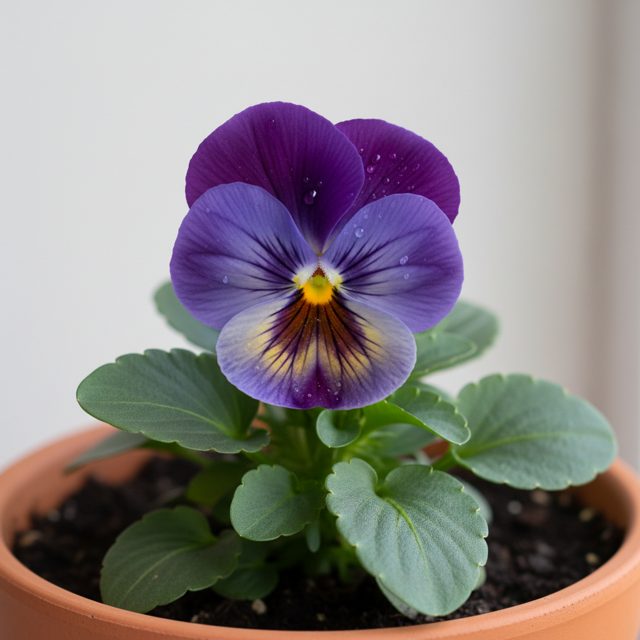
- Scientific name
- Viola x wittrockiana
- Family
- Violaceae
- Also known as
- Garden Pansy, Viola
- Category
- Flowers
- Care difficulty
- Easy
- Pet safety
- Non-toxic to cats and dogs
How to care for pansy
- Light: Prefers full sun to partial shade; too much hot sun can cause them to fade.
- Water: Keep soil consistently moist but not waterlogged. Water deeply when the top inch of soil feels dry.
- Soil: Thrives in well-draining, humus-rich soil with a slightly acidic to neutral pH.
- Temperature: Best performance in cool temperatures between 45-65°F (7-18°C). Frost tolerant but struggles in hot summer heat.
- Humidity: Tolerates average humidity levels; good air circulation helps prevent fungal issues.
- Fertilizer: Feed every 2-4 weeks with a balanced liquid fertilizer during the blooming season. Avoid over-fertilizing, which can promote foliage over flowers.
- Propagation: Typically propagated from seed; sow seeds indoors 8-10 weeks before the last frost or directly outdoors in late summer for fall blooms.
Is pansy toxic to pets?
Pet-safe. Pansies are considered non-toxic to cats, dogs, and humans. See our guide to toxic plants for cats and dogs.
Common problems
- Leggy growth and reduced flowering: Deadhead spent blooms regularly to encourage new growth and more flowers. Ensure adequate light.
- Powdery mildew or fungal spots: Improve air circulation, avoid overhead watering, and consider a fungicide if severe.
Did you know?
The word 'pansy' comes from the French word 'pensée', meaning 'thought', because the flower's 'nodding' head is said to resemble someone in deep thought.
Let PlantBetter help
Snap a photo with PlantBetter to confirm your plant is a pansy, spot problems early and get care reminders tailored to your home.