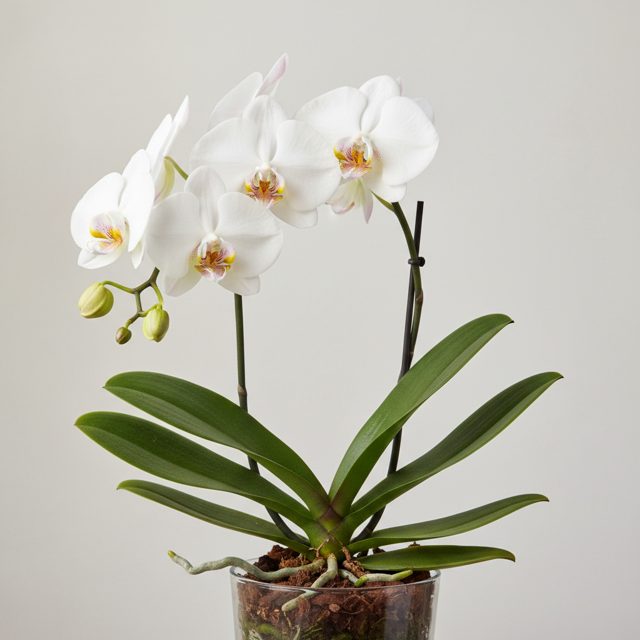
- Scientific name
- Phalaenopsis spp.
- Family
- Orchidaceae
- Also known as
- Moth Orchid
- Category
- Flowers
- Care difficulty
- Moderate
- Pet safety
- Non-toxic to cats and dogs
How to care for orchid (phalaenopsis)
- Light: Prefers bright, indirect light; an east-facing window is ideal. Direct sun can scorch leaves. Low light will prevent flowering.
- Water: Water when the potting medium is nearly dry, typically every 7-10 days. Avoid letting the plant sit in standing water, as this leads to root rot.
- Soil: Requires a specialized orchid potting mix, usually composed of bark, sphagnum moss, or a combination. Never use regular potting soil.
- Temperature: Thrives in warm temperatures between 65-80°F (18-27°C). A slight drop in temperature at night (5-10°F) can encourage blooming.
- Humidity: Prefers high humidity (50-70%). Use a humidity tray, mist regularly, or place near a humidifier, especially in dry indoor environments.
- Fertilizer: Feed with a balanced orchid-specific fertilizer, diluted to half or quarter strength, every 2-4 weeks during active growth. Reduce frequency after blooming.
- Propagation: Propagated by 'keikis' (baby orchids) that sometimes grow on flower spikes. Once roots are 1-2 inches long, they can be carefully removed and potted.
Is orchid (phalaenopsis) toxic to pets?
Pet-safe. Non-toxic to cats, dogs, and humans. See our guide to toxic plants for cats and dogs.
Common problems
- No blooms or few blooms: Check for adequate light, ensure a slight temperature drop at night, and consistent watering and feeding schedules.
- Root rot (mushy, black roots): Ensure excellent drainage, use appropriate orchid medium, and allow medium to dry slightly between waterings.
Did you know?
Phalaenopsis orchids are epiphytic in nature, meaning they grow on other plants (like trees) in their native tropical habitats, not in soil.
Let PlantBetter help
Snap a photo with PlantBetter to confirm your plant is a orchid (phalaenopsis), spot problems early and get care reminders tailored to your home.