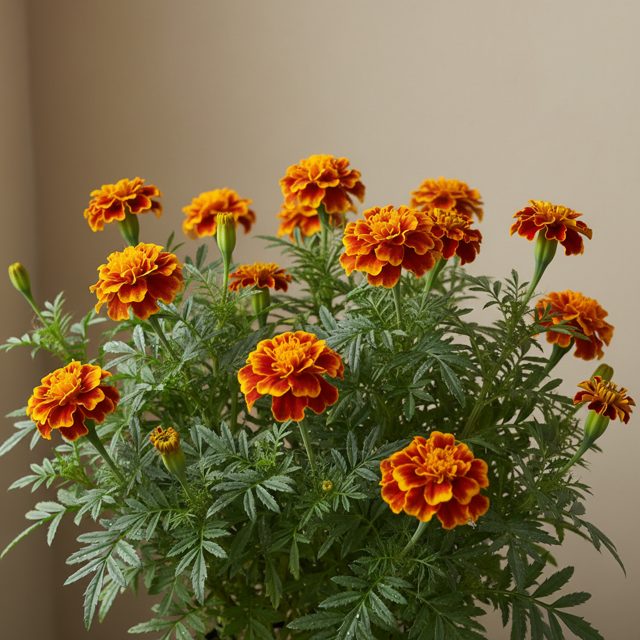
- Scientific name
- Tagetes patula
- Family
- Asteraceae
- Also known as
- French Marigold, African Marigold
- Category
- Flowers
- Care difficulty
- Easy
- Pet safety
- Toxic to pets
How to care for marigold
- Light: Thrives in full sun, requiring at least 6 hours of direct sunlight daily for best flowering. Can tolerate some afternoon shade in very hot climates.
- Water: Water regularly, especially during dry spells, keeping the soil consistently moist but not waterlogged. Allow the top inch of soil to dry out between waterings.
- Soil: Adapts to most well-draining soil types, but prefers moderately fertile loam. Good drainage is essential to prevent root rot.
- Temperature: Prefers warm temperatures and is sensitive to frost. Typically grown as an annual in most climates.
- Humidity: Tolerates average to low humidity levels well. High humidity combined with poor air circulation can sometimes lead to powdery mildew.
- Fertilizer: Generally not a heavy feeder; a balanced, all-purpose fertilizer at planting time is often sufficient. Too much nitrogen can result in lush foliage but fewer flowers.
- Propagation: Easily grown from seed, which can be sown directly outdoors after the last frost. They germinate quickly and grow rapidly.
Is marigold toxic to pets?
Not pet-safe. Marigolds (Tagetes species) are generally considered mildly toxic to cats, dogs, and horses, potentially causing mouth irritation and mild gastrointestinal upset if ingested. Contact with the sap can cause skin irritation in some individuals. See our guide to toxic plants for cats and dogs.
Common problems
- Fewer blooms: Ensure adequate sunlight exposure and deadhead spent flowers regularly to encourage continuous blooming and a tidier appearance.
- Spider mites: Spray infested plants with a strong stream of water or an insecticidal soap, and increase humidity around plants if possible.
Did you know?
Marigolds are often planted as companion plants in vegetable gardens because their roots release compounds that can deter nematodes and other soil-borne pests.
Let PlantBetter help
Snap a photo with PlantBetter to confirm your plant is a marigold, spot problems early and get care reminders tailored to your home.