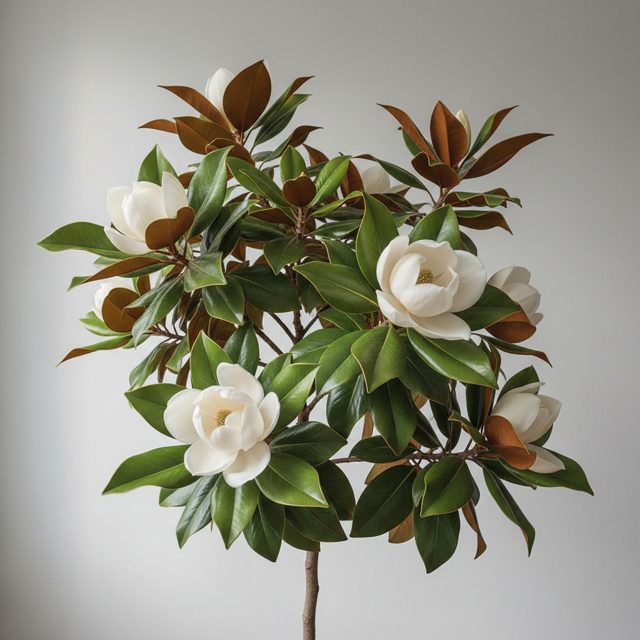
- Scientific name
- Magnolia grandiflora (Southern Magnolia) / various Magnolia species
- Family
- Magnoliaceae
- Also known as
- Southern Magnolia, Star Magnolia, Saucer Magnolia
- Category
- Flowers
- Care difficulty
- Moderate
- Pet safety
- Non-toxic to cats and dogs
How to care for magnolia
- Light: Prefers full sun to partial shade; at least 4-6 hours of direct sunlight is ideal. Some species may prefer more shade in hot climates.
- Water: Requires consistent moisture, especially when young. Water deeply and regularly, ensuring the soil remains moist but not waterlogged. Established trees are more drought-tolerant.
- Soil: Thrives in well-draining, rich, acidic to neutral soil. Amend heavy clay or sandy soils with organic matter to improve texture.
- Temperature: Hardiness varies greatly by species, generally USDA Zones 4-9. Protect young trees from late spring frosts that can damage early blooms.
- Humidity: Tolerates average humidity. Some species prefer higher humidity.
- Fertilizer: Fertilize young trees lightly with a balanced, slow-release fertilizer in spring. Established trees generally need little to no fertilization if the soil is healthy.
- Propagation: Can be propagated by seeds (which require stratification), layering, or semi-hardwood cuttings (often difficult). Grafting is common for specific cultivars.
Is magnolia toxic to pets?
Pet-safe. Magnolia plants are generally considered non-toxic to cats, dogs, and humans. See our guide to toxic plants for cats and dogs.
Common problems
- Yellowing leaves (chlorosis): Often indicates iron deficiency in alkaline soils; acidify the soil with elemental sulfur or use an iron chelate supplement.
- Lack of blooms: Ensure adequate sunlight exposure and avoid late-season pruning, which can remove flower buds; some species take years to mature and bloom.
Did you know?
Magnolias are one of the most ancient flowering plants, with fossils dating back 20 million years, existing before bees, so they are pollinated by beetles.
Let PlantBetter help
Snap a photo with PlantBetter to confirm your plant is a magnolia, spot problems early and get care reminders tailored to your home.