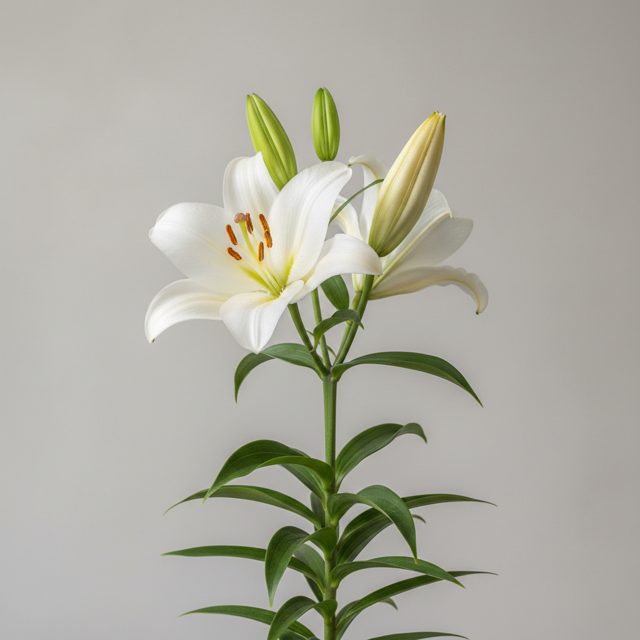
- Scientific name
- Lilium longiflorum
- Family
- Liliaceae
- Also known as
- Easter Lily, Asiatic Lily
- Category
- Flowers
- Care difficulty
- Moderate
- Pet safety
- Toxic to pets
How to care for lily
- Light: Requires full sun to partial shade, ideally at least 6 hours of direct sunlight for the flowers, but with roots kept cool by surrounding plants or mulch. Too much shade can result in leggy plants and fewer blooms.
- Water: Keep soil consistently moist but well-draining during the growing season. Reduce watering after flowering and during dormancy.
- Soil: Prefers fertile, well-draining soil rich in organic matter, with a slightly acidic to neutral pH. Good drainage is critical to prevent bulb rot.
- Temperature: Hardiness varies by species, generally USDA Zones 3-9. Many require a cold dormancy period. Protect from late spring frosts.
- Humidity: Tolerates average humidity levels. Good air circulation helps prevent fungal diseases in humid conditions.
- Fertilizer: Apply a balanced, slow-release granular fertilizer in early spring as new growth emerges, and again after flowering. Avoid high nitrogen fertilizers.
- Propagation: Propagated by bulb scales, bulbils (small bulbs formed on the stem), or offsets from the main bulb. Division can be done in fall or early spring.
Is lily toxic to pets?
Not pet-safe. True lilies (Lilium species) are highly toxic to cats, even small ingestions (e.g., pollen, leaves) can cause acute kidney failure. They are generally considered non-toxic or only mildly toxic to dogs and humans. See our guide to toxic plants for cats and dogs.
Common problems
- Lily beetles: Hand-pick adult beetles and larvae regularly. In severe infestations, apply appropriate insecticides, ensuring safety for beneficial insects.
- Fungal diseases (Botrytis blight): Improve air circulation, avoid overhead watering, and remove affected leaves. Fungicides can be used preventatively or curatively.
Did you know?
Some lily species can produce hundreds of fragrant flowers from a single bulb over a growing season.
Let PlantBetter help
Snap a photo with PlantBetter to confirm your plant is a lily, spot problems early and get care reminders tailored to your home.