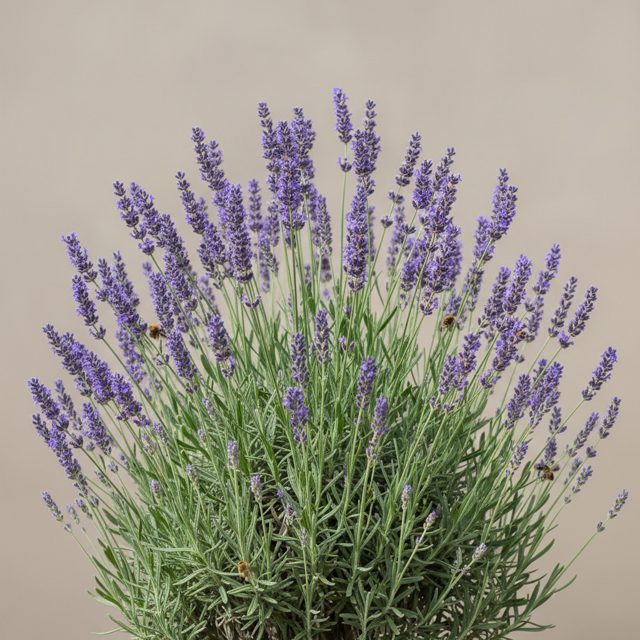
- Scientific name
- Lavandula angustifolia
- Family
- Lamiaceae
- Also known as
- English Lavender, Common Lavender
- Category
- Flowers
- Care difficulty
- Easy
- Pet safety
- Toxic to pets
How to care for lavender
- Light: Requires full sun (at least 6-8 hours of direct sunlight daily) for best growth and flowering. Less light leads to leggy plants and reduced blooms.
- Water: Drought-tolerant once established. Water sparingly, only when the soil is dry, especially during hot, dry periods. Overwatering is a common killer.
- Soil: Prefers well-draining, sandy or gravelly soil with a neutral to slightly alkaline pH. Good drainage is crucial; avoid heavy, wet soils.
- Temperature: Hardy in USDA Zones 5-9. Prefers warm, dry summers and tolerates cold winters if well-drained. Protect from extreme winter wetness.
- Humidity: Thrives in low to average humidity. High humidity combined with poor air circulation can lead to fungal diseases.
- Fertilizer: Generally does not require much fertilizer. If soil is poor, a light application of balanced, slow-release granular fertilizer in spring is sufficient. Avoid high nitrogen.
- Propagation: Commonly propagated from semi-hardwood stem cuttings taken in late spring or early summer. Seeds can be used but are less reliable.
Is lavender toxic to pets?
Not pet-safe. Contains linalool and linalyl acetate, which can cause vomiting, diarrhea, and lethargy if ingested by pets, particularly cats. Can be mildly irritating to humans in large quantities. See our guide to toxic plants for cats and dogs.
Common problems
- Fungal diseases (e.g., root rot, gray mold): Ensure excellent soil drainage, avoid overwatering, provide good air circulation, and prune for healthy growth.
- Leggy growth and sparse flowering: Ensure full sun exposure and prune annually in spring to encourage bushy growth and more blooms.
Did you know?
The word 'lavender' comes from the Latin word 'lavare,' meaning 'to wash,' referring to its ancient use in baths and as a scent for laundry.
Let PlantBetter help
Snap a photo with PlantBetter to confirm your plant is a lavender, spot problems early and get care reminders tailored to your home.