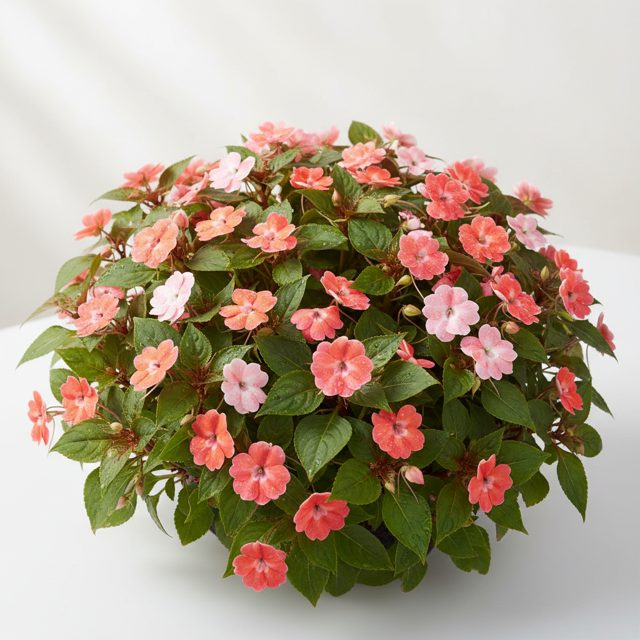
- Scientific name
- Impatiens walleriana (common impatiens) / Impatiens hawkeri (New Guinea impatiens)
- Family
- Balsaminaceae
- Also known as
- Busy Lizzy, Patience Plant
- Category
- Flowers
- Care difficulty
- Easy
- Pet safety
- Non-toxic to cats and dogs
How to care for impatiens
- Light: Prefers partial to full shade; direct afternoon sun can scorch leaves and reduce flowering. New Guinea impatiens tolerate more sun.
- Water: Requires consistently moist soil; they wilt quickly when dry. Water daily during hot, dry periods.
- Soil: Thrives in rich, well-draining soil with a slightly acidic pH. Amend with compost for best results.
- Temperature: Prefers warm temperatures, ideally between 60-75°F (15-24°C). Not frost tolerant.
- Humidity: Prefers high humidity. Misting can be beneficial in dry climates.
- Fertilizer: Feed every 2-4 weeks with a balanced liquid fertilizer throughout the growing season. Use a slow-release granular fertilizer at planting.
- Propagation: Easily propagated from stem cuttings in water or moist soil. Can also be grown from seed, though germination can be slow.
Is impatiens toxic to pets?
Pet-safe. Impatiens are generally considered non-toxic to cats, dogs, and humans. See our guide to toxic plants for cats and dogs.
Common problems
- Sudden wilting: This is often a sign of extreme thirst; water immediately and thoroughly. Check soil moisture regularly.
- Powdery mildew or downy mildew: Ensure good air circulation, avoid overhead watering, and remove affected leaves. Look for resistant varieties.
Did you know?
The name 'Impatiens' comes from the Latin word for 'impatient' due to its seed pods, which burst open and scatter seeds at the slightest touch when ripe.
Let PlantBetter help
Snap a photo with PlantBetter to confirm your plant is a impatiens, spot problems early and get care reminders tailored to your home.