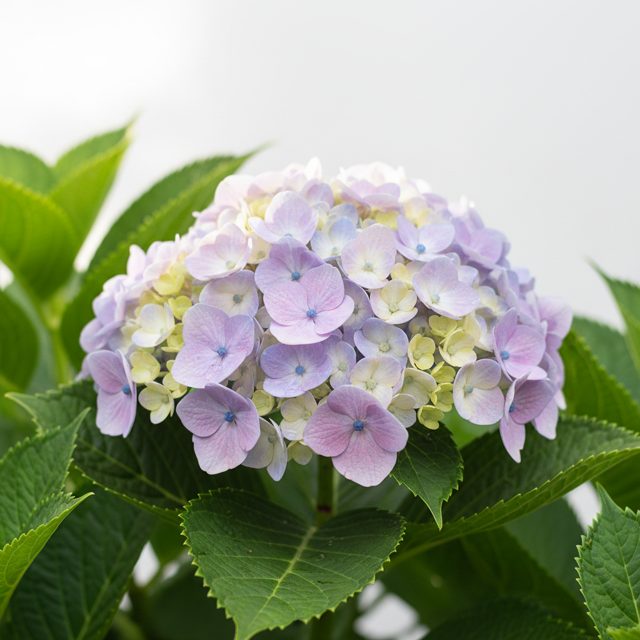
- Scientific name
- Hydrangea macrophylla
- Family
- Hydrangeaceae
- Also known as
- Bigleaf Hydrangea, Mophead Hydrangea
- Category
- Flowers
- Care difficulty
- Moderate
- Pet safety
- Toxic to pets
How to care for hydrangea
- Light: Prefers partial shade, especially protection from intense afternoon sun. Too much shade can reduce flowering.
- Water: Requires consistently moist soil, especially during flowering season; do not let the soil dry out completely. Water deeply several times a week in hot, dry weather.
- Soil: Thrives in rich, moist, well-draining soil with plenty of organic matter. Soil pH greatly influences flower color.
- Temperature: Hardy in USDA Zones 3-7, preferring moderate temperatures. Protect from late spring frosts that can damage new growth.
- Humidity: Tolerates average household humidity but appreciates higher humidity in very dry climates. Misting is not typically necessary for outdoor plants.
- Fertilizer: Fertilize in early spring with a slow-release granular fertilizer formulated for acid-loving plants. Avoid over-fertilizing, which can promote foliage over flowers.
- Propagation: Easily propagated from softwood cuttings taken in late spring or early summer. Root cuttings in a moist, sterile potting mix.
Is hydrangea toxic to pets?
Not pet-safe. Hydrangeas are toxic to cats, dogs, and horses if ingested, causing gastrointestinal upset, lethargy, and sometimes cyanide-like symptoms. See our guide to toxic plants for cats and dogs.
Common problems
- Lack of flowers: Ensure adequate light exposure (at least 4-6 hours of morning sun) and proper pruning technique, as some varieties bloom on old wood.
- Leaf spot/Powdery mildew: Improve air circulation by proper spacing and pruning. Remove affected leaves and apply a fungicide if severe.
Did you know?
The color of many Hydrangea macrophylla flowers can be changed by adjusting the soil's pH, a unique characteristic among flowering plants.
Let PlantBetter help
Snap a photo with PlantBetter to confirm your plant is a hydrangea, spot problems early and get care reminders tailored to your home.