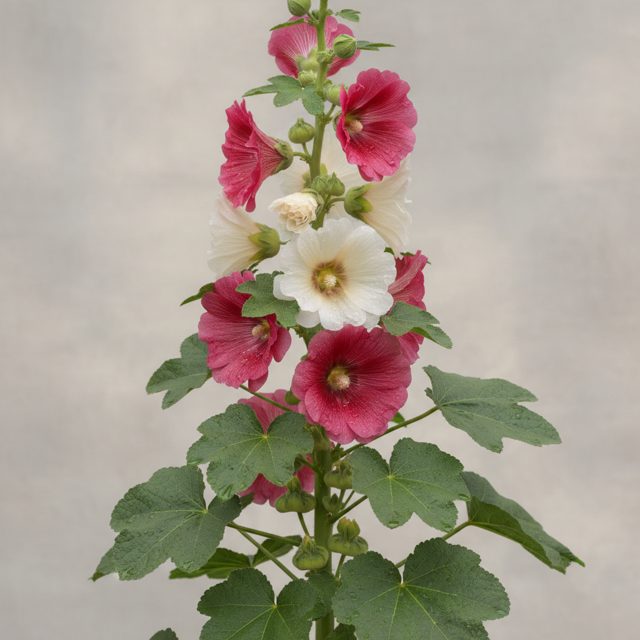
- Scientific name
- Alcea rosea
- Family
- Malvaceae
- Also known as
- Common Hollyhock, Garden Hollyhock
- Category
- Flowers
- Care difficulty
- Easy
- Pet safety
- Non-toxic to cats and dogs
How to care for hollyhock
- Light: Requires full sun for best flowering, at least 6-8 hours daily. Can tolerate light afternoon shade in hot climates.
- Water: Keep soil consistently moist during flowering, especially in dry periods. Once established, they are somewhat drought-tolerant.
- Soil: Thrives in rich, well-draining soil. A neutral to slightly alkaline pH is preferred.
- Temperature: Grows best in moderate temperatures, but hardy in USDA zones 3-8. They tolerate both heat and cold.
- Humidity: Tolerates average humidity. Good air circulation is crucial to prevent fungal diseases.
- Fertilizer: Feed with a balanced slow-release fertilizer in early spring or a liquid fertilizer every 4-6 weeks during blooming. Avoid excessive nitrogen, which can lead to lush foliage but fewer flowers.
- Propagation: Primarily propagated from seed; sow seeds outdoors in late spring or early summer for blooms the following year. They often self-seed readily.
Is hollyhock toxic to pets?
Pet-safe. Hollyhocks are considered non-toxic to cats, dogs, and humans. See our guide to toxic plants for cats and dogs.
Common problems
- Hollyhock rust (fungal disease): Provide good air circulation, avoid overhead watering, remove affected leaves immediately, and apply a fungicide if severe.
- Staking required due to tall growth: Stake plants early in the season to support their tall flower stalks and prevent them from falling over in wind or rain.
Did you know?
Hollyhocks were once believed to ward off evil and were often planted near doorways of homes.
Let PlantBetter help
Snap a photo with PlantBetter to confirm your plant is a hollyhock, spot problems early and get care reminders tailored to your home.