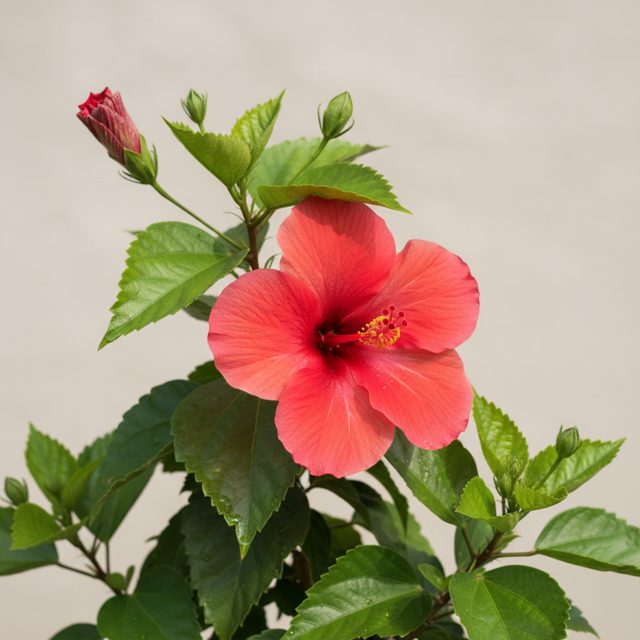
- Scientific name
- Hibiscus rosa-sinensis
- Family
- Malvaceae
- Also known as
- Chinese Hibiscus, Tropical Hibiscus
- Category
- Flowers
- Care difficulty
- Moderate
- Pet safety
- Toxic to pets
How to care for hibiscus
- Light: Requires full sun, at least 6-8 hours of direct sunlight daily, to produce the most abundant flowers. Less sun will result in fewer blooms.
- Water: Water thoroughly and regularly, keeping the soil consistently moist, especially during hot, dry periods. Do not allow the soil to dry out completely between waterings.
- Soil: Prefers rich, well-draining soil with a slightly acidic pH. Amend with compost or other organic matter to improve fertility and drainage.
- Temperature: Tropical hibiscus (H. rosa-sinensis) thrives in warm temperatures, typically above 60°F (15°C), and is very sensitive to frost. Hardy hibiscus (H. moscheutos) is more cold-tolerant.
- Humidity: Prefers high humidity, especially tropical varieties. Indoor plants benefit from misting or a pebble tray to increase humidity.
- Fertilizer: Feed regularly every 2-4 weeks during the growing season with a high-potassium fertilizer to encourage flowering. Reduce feeding in fall and winter.
- Propagation: Easily propagated from softwood stem cuttings taken in spring or summer. Root cuttings in a moist, sterile potting mix with rooting hormone.
Is hibiscus toxic to pets?
Not pet-safe. Hibiscus (Hibiscus syriacus, H. rosa-sinensis) is considered non-toxic to cats, dogs, and horses by ASPCA. Some sources suggest mild gastrointestinal upset with large ingestion. See our guide to toxic plants for cats and dogs.
Common problems
- Yellowing leaves/Bud drop: Often caused by stress from inconsistent watering (too much or too little), nutrient deficiencies, or sudden temperature changes. Ensure consistent care.
- Aphids/Spider mites/Whiteflies: Spray affected plants with insecticidal soap or neem oil. For severe infestations, introduce beneficial insects or use targeted pesticides.
Did you know?
In many cultures, the hibiscus flower has symbolic meanings, including beauty, passion, and hospitality.
Let PlantBetter help
Snap a photo with PlantBetter to confirm your plant is a hibiscus, spot problems early and get care reminders tailored to your home.