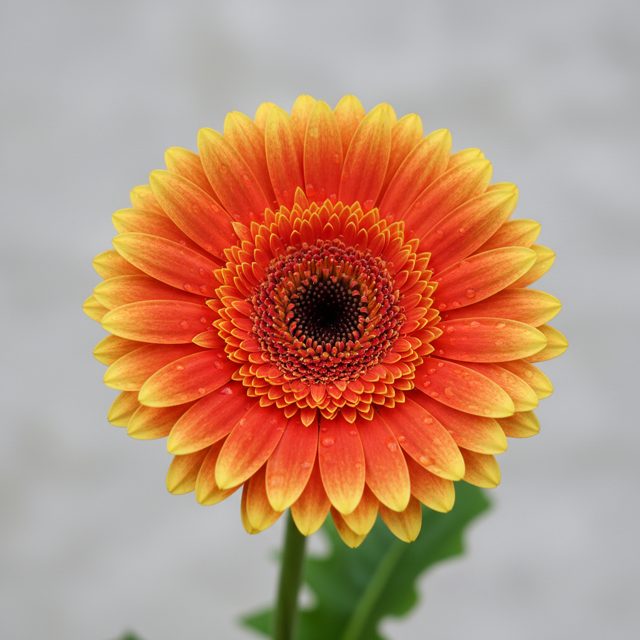
- Scientific name
- Gerbera jamesonii
- Family
- Asteraceae
- Also known as
- Transvaal Daisy, Barberton Daisy
- Category
- Flowers
- Care difficulty
- Moderate
- Pet safety
- Non-toxic to cats and dogs
How to care for gerbera daisy
- Light: Requires full sun for best flowering, at least 6 hours daily. In very hot climates, provide some afternoon shade.
- Water: Keep soil consistently moist but never soggy. Water deeply when the top inch of soil feels dry, reducing frequency in winter.
- Soil: Needs well-draining, loamy soil rich in organic matter. Avoid heavy clay soils.
- Temperature: Prefers moderate temperatures between 60-75°F (15-24°C). Can tolerate light frost but are best grown as annuals in cold climates.
- Humidity: Tolerates average humidity. Good air circulation is important to prevent fungal diseases.
- Fertilizer: Feed with a balanced liquid fertilizer every 2-4 weeks during the growing season. A slow-release granular fertilizer can be applied at planting.
- Propagation: Can be propagated from seed or by division of clumps. Division is best done in early spring.
Is gerbera daisy toxic to pets?
Pet-safe. Gerbera daisies are considered non-toxic to cats, dogs, and humans. See our guide to toxic plants for cats and dogs.
Common problems
- Yellowing leaves or lack of blooms: Ensure adequate sunlight, proper watering, and regular fertilization. Check for nutrient deficiencies.
- Powdery mildew or root rot: Improve air circulation, avoid overhead watering, and ensure excellent soil drainage to prevent root rot.
Did you know?
Gerbera daisies are the fifth most popular cut flower in the world, prized for their wide range of colors and long vase life.
Let PlantBetter help
Snap a photo with PlantBetter to confirm your plant is a gerbera daisy, spot problems early and get care reminders tailored to your home.