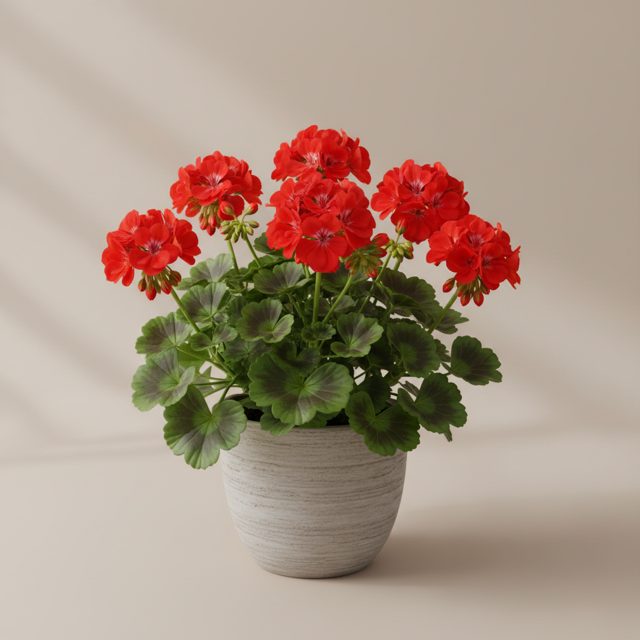
- Scientific name
- Pelargonium x hortorum
- Family
- Geraniaceae
- Also known as
- Zonal Geranium, Pelargonium
- Category
- Flowers
- Care difficulty
- Easy
- Pet safety
- Toxic to pets
How to care for geranium
- Light: Requires full sun, at least 6 hours of direct sunlight daily, for optimal flowering. In very hot climates, some afternoon shade can prevent scorching.
- Water: Water thoroughly when the top inch of soil is dry. Allow the soil to dry out slightly between waterings to prevent root rot.
- Soil: Thrives in well-draining, fertile potting mix or garden soil. Good drainage is essential for healthy growth.
- Temperature: Prefers warm temperatures, typically above 50°F (10°C), and is very sensitive to frost. Grown as an annual in most temperate zones.
- Humidity: Tolerates average to low humidity levels. Avoid overly humid conditions combined with poor air circulation, which can lead to fungal diseases.
- Fertilizer: Feed every 2-4 weeks with a balanced liquid fertilizer during the growing season. For potted plants, use a diluted solution regularly.
- Propagation: Easily propagated by stem cuttings taken in late summer or early fall. Allow cuttings to callus for a day before planting in moist soil.
Is geranium toxic to pets?
Not pet-safe. Pelargonium (commonly called Geranium) is toxic to cats, dogs, and horses, causing vomiting, anorexia, depression, and skin irritation if ingested or contacted. See our guide to toxic plants for cats and dogs.
Common problems
- Yellowing leaves: Often a sign of overwatering or nutrient deficiency. Check soil moisture and ensure proper drainage, and apply a balanced fertilizer.
- Bud blast (buds dry up and fall off): This can be caused by inconsistent watering, extreme temperature fluctuations, or inadequate light. Provide consistent care.
Did you know?
True geraniums (genus Geranium) are hardy perennials, while the plants most commonly called 'geraniums' in gardens are actually Pelargoniums, which are tender perennials or annuals.
Let PlantBetter help
Snap a photo with PlantBetter to confirm your plant is a geranium, spot problems early and get care reminders tailored to your home.