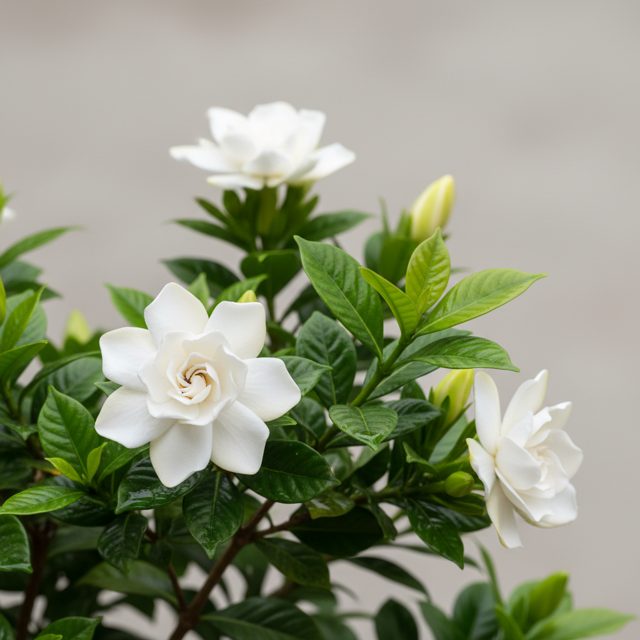
- Scientific name
- Gardenia jasminoides
- Family
- Rubiaceae
- Also known as
- Cape Jasmine
- Category
- Flowers
- Care difficulty
- Moderate
- Pet safety
- Toxic to pets
How to care for gardenia
- Light: Requires bright, indirect light; direct sun can scorch leaves. Provide at least 6 hours of bright light daily.
- Water: Keep the soil consistently moist but never waterlogged. Use distilled or rainwater if possible, as they are sensitive to hard water.
- Soil: Prefers acidic, well-draining soil rich in organic matter. A pH between 5.0 and 6.0 is ideal.
- Temperature: Thrives in temperatures between 65-70°F (18-21°C) during the day and 60-65°F (15-18°C) at night. Avoid sudden temperature fluctuations.
- Humidity: High humidity is crucial for gardenias, ideally 60% or higher. Mist regularly, use a pebble tray, or place near a humidifier.
- Fertilizer: Feed every 2-4 weeks during the growing season with an acid-forming fertilizer. Reduce feeding in fall and winter.
- Propagation: Propagate by taking 4-6 inch stem cuttings from new growth in late spring or early summer. Dip in rooting hormone and place in moist soil.
Is gardenia toxic to pets?
Not pet-safe. Toxic to cats and dogs, causing vomiting, diarrhea, and weakness. See our guide to toxic plants for cats and dogs.
Common problems
- Yellowing leaves (chlorosis): Often caused by iron deficiency or alkaline soil; use an iron supplement or acid-forming fertilizer.
- Bud drop: Can be due to low humidity, inconsistent watering, or sudden temperature changes; maintain stable conditions.
Did you know?
The fragrance of gardenia flowers is often used in perfumes and aromatherapy for its calming effects.
Let PlantBetter help
Snap a photo with PlantBetter to confirm your plant is a gardenia, spot problems early and get care reminders tailored to your home.