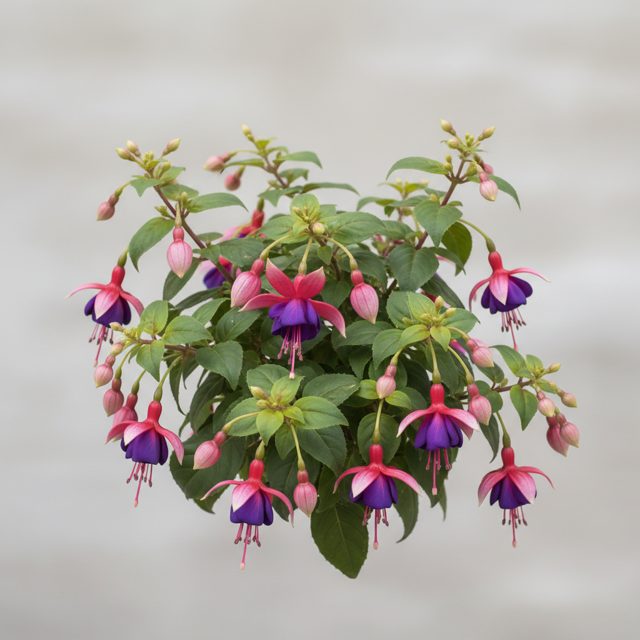
- Scientific name
- Fuchsia hybrida / various species
- Family
- Onagraceae
- Also known as
- Lady's Eardrops, Earring Flower
- Category
- Flowers
- Care difficulty
- Moderate
- Pet safety
- Non-toxic to cats and dogs
How to care for fuchsia
- Light: Prefers partial shade; too much direct sun can scorch leaves and reduce flowering. Morning sun and afternoon shade is ideal.
- Water: Requires consistent moisture; water thoroughly when the top inch of soil feels dry. Do not allow the soil to completely dry out, especially during flowering.
- Soil: Thrives in rich, well-draining, slightly acidic soil. A good quality potting mix with added organic matter works well.
- Temperature: Prefers cool to moderate temperatures between 55-75°F (13-24°C). Protect from high heat, which can cause wilting and flower drop.
- Humidity: Enjoys high humidity; misting daily or using a pebble tray can help, especially in dry climates.
- Fertilizer: Feed with a high-potassium liquid fertilizer every 2-4 weeks during the active growing and flowering season. Reduce frequency in fall and winter.
- Propagation: Easily propagated from softwood stem cuttings taken in spring or early summer. Root cuttings in moist potting mix or water.
Is fuchsia toxic to pets?
Pet-safe. Fuchsia plants are generally considered non-toxic to cats, dogs, and humans. See our guide to toxic plants for cats and dogs.
Common problems
- Dropping buds/flowers: Often caused by high temperatures, low humidity, or inconsistent watering; ensure cool, moist conditions.
- Whiteflies/spider mites: Isolate affected plants and treat with insecticidal soap or neem oil; maintain good air circulation.
Did you know?
The genus Fuchsia was named after German botanist Leonhart Fuchs, and its vibrant colors inspired the 'fuchsia' color in fashion.
Let PlantBetter help
Snap a photo with PlantBetter to confirm your plant is a fuchsia, spot problems early and get care reminders tailored to your home.