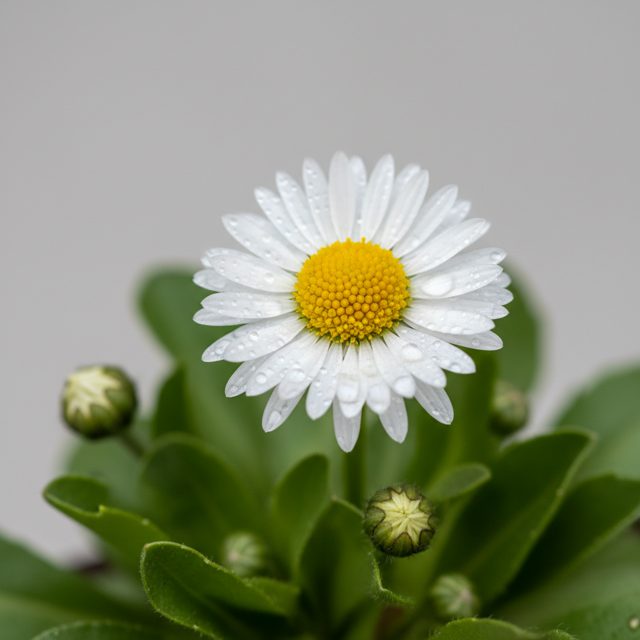
- Scientific name
- Bellis perennis
- Family
- Asteraceae
- Also known as
- Common Daisy, English Daisy
- Category
- Flowers
- Care difficulty
- Easy
- Pet safety
- Toxic to pets
How to care for daisy
- Light: Prefers full sun to partial shade, meaning at least 4-6 hours of direct sunlight. In hot climates, some afternoon shade is beneficial.
- Water: Requires consistently moist soil, especially during dry periods. Water deeply when the top inch of soil feels dry to the touch.
- Soil: Thrives in average, well-draining soil with moderate fertility. Amend heavy clay soils with organic matter for better drainage.
- Temperature: Hardy in USDA Zones 4-8, preferring cooler temperatures. Can be grown as an annual in hotter climates.
- Humidity: Tolerates average humidity levels. High humidity combined with poor air circulation can sometimes encourage fungal diseases.
- Fertilizer: Generally not a heavy feeder; a balanced, slow-release fertilizer in early spring is sufficient. Avoid over-fertilizing.
- Propagation: Easily propagated by seed sown in late summer or early spring, or by dividing clumps in spring or fall. Self-seeds readily.
Is daisy toxic to pets?
Not pet-safe. Daisies are mildly toxic to cats, dogs, and horses, potentially causing gastrointestinal upset if consumed. See our guide to toxic plants for cats and dogs.
Common problems
- Leggy growth/fewer blooms: Ensure adequate sunlight and deadhead spent flowers regularly to encourage continuous blooming and a bushier habit.
- Aphids: Spray affected plants with a strong stream of water or use an insecticidal soap to dislodge and kill pests.
Did you know?
The word 'daisy' comes from the Old English 'dæges ēage,' meaning 'day's eye,' referring to the way the flower opens with the sun and closes at dusk.
Let PlantBetter help
Snap a photo with PlantBetter to confirm your plant is a daisy, spot problems early and get care reminders tailored to your home.