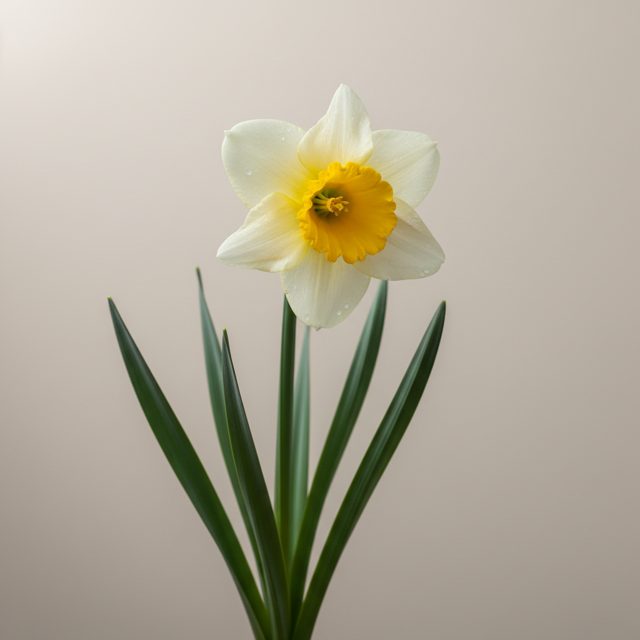
- Scientific name
- Narcissus pseudonarcissus
- Family
- Amaryllidaceae
- Also known as
- Narcissus, Jonquil
- Category
- Flowers
- Care difficulty
- Easy
- Pet safety
- Toxic to pets
How to care for daffodil
- Light: Requires full sun to partial shade, at least 4-6 hours of direct sunlight. While they can tolerate some shade, flowering will be more abundant in sun.
- Water: Water regularly during their active growth period in spring if rainfall is insufficient. Once foliage dies back, they prefer a dry rest period.
- Soil: Thrives in well-draining, moderately fertile soil. Heavy, waterlogged soils can lead to bulb rot.
- Temperature: Hardy in USDA Zones 3-8, requiring a cold dormancy period to flower reliably. They emerge in early spring.
- Humidity: Tolerates average humidity levels. Does not require specific humidity care.
- Fertilizer: Apply a balanced bulb fertilizer or bone meal at planting time in the fall. An optional light feeding can be given in early spring as foliage emerges.
- Propagation: Propagated by natural division of existing bulbs. Dig up crowded clumps every few years after foliage dies back and separate the bulbs for replanting.
Is daffodil toxic to pets?
Not pet-safe. Daffodils are highly toxic to cats, dogs, and horses. The entire plant, especially the bulb, can cause severe vomiting, diarrhea, abdominal pain, and cardiac arrhythmias if ingested. See our guide to toxic plants for cats and dogs.
Common problems
- No blooms (blindness): Ensure bulbs are planted at the correct depth, receive adequate sun, and are not over-fertilized with nitrogen. Allow foliage to fully mature after flowering.
- Bulb rot: Plant in well-draining soil and avoid overwatering. Remove any soft or diseased bulbs before planting.
Did you know?
Daffodils contain alkaloids that are toxic to deer and rodents, making them a good choice for gardens where these pests are a problem.
Let PlantBetter help
Snap a photo with PlantBetter to confirm your plant is a daffodil, spot problems early and get care reminders tailored to your home.