- Scientific name
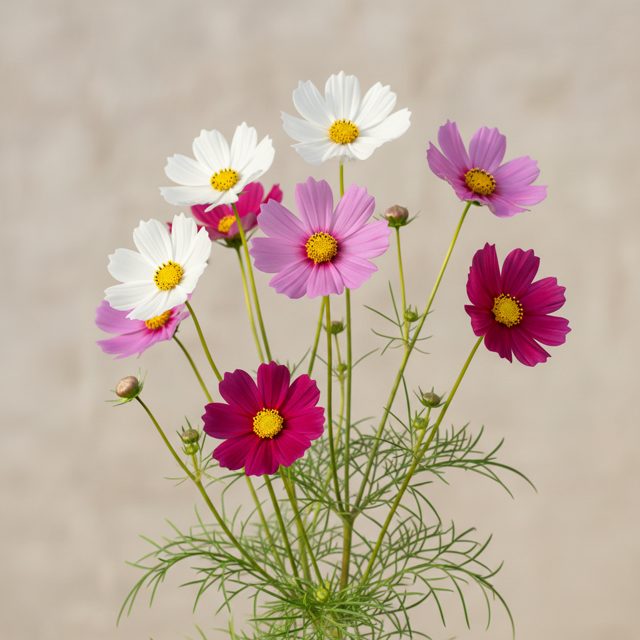
- Cosmos bipinnatus
- Family
- Asteraceae
- Also known as
- Garden Cosmos, Mexican Aster
- Category
- Flowers
- Care difficulty
- Easy
- Pet safety
- Non-toxic to cats and dogs
How to care for cosmos
- Light: Requires full sun, at least 6-8 hours of direct sunlight daily, for best flowering. Too much shade results in fewer blooms and leggy plants.
- Water: Once established, cosmos are drought-tolerant and prefer somewhat dry conditions. Water sparingly, allowing the soil to dry out between waterings.
- Soil: Prefers average, well-draining soil; overly rich soil can lead to more foliage and fewer flowers. Tolerates a range of soil types.
- Temperature: Thrives in warm temperatures, typically above 65°F (18°C). They are very sensitive to frost and should be planted after all danger of frost has passed.
- Humidity: Average outdoor humidity is fine. Good air circulation helps prevent issues.
- Fertilizer: Avoid over-fertilizing, especially with high-nitrogen fertilizers, which can encourage foliage over flowers. A light application of balanced fertilizer once or twice during the season is sufficient.
- Propagation: Easily grown from seeds directly sown outdoors after the last frost. They germinate quickly and can also self-sow.
Is cosmos toxic to pets?
Pet-safe. Non-toxic to cats, dogs, and humans. See our guide to toxic plants for cats and dogs.
Common problems
- Leggy growth and few flowers: Ensure adequate sunlight and avoid over-fertilizing with nitrogen; pinch back young plants for bushier growth.
- Aphids: Spray infested areas with insecticidal soap or a strong stream of water to dislodge the pests.
Did you know?
The name 'Cosmos' comes from the Greek word 'kosmos,' meaning 'ordered world' or 'ornament,' referring to the flowers' orderly arrangement of petals.
Let PlantBetter help
Snap a photo with PlantBetter to confirm your plant is a cosmos, spot problems early and get care reminders tailored to your home.