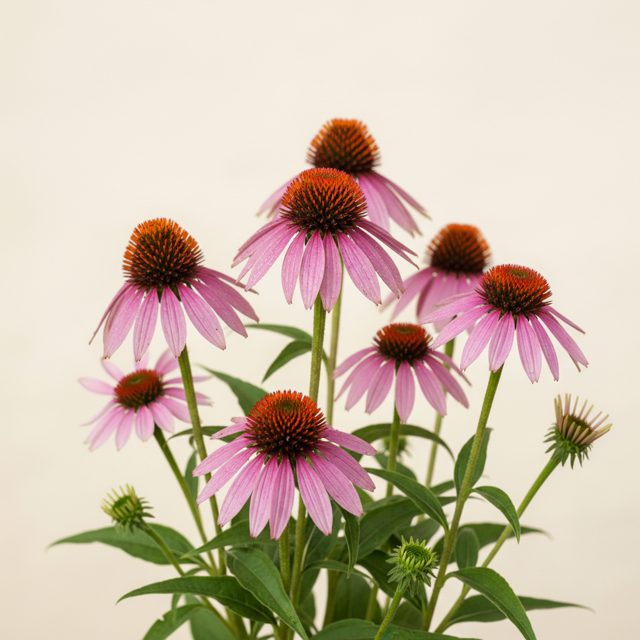
- Scientific name
- Echinacea purpurea / various Echinacea species
- Family
- Asteraceae
- Also known as
- Purple Coneflower, American Coneflower, Echinacea
- Category
- Flowers
- Care difficulty
- Easy
- Pet safety
- Non-toxic to cats and dogs
How to care for coneflower
- Light: Prefers full sun, requiring at least 6 hours of direct sunlight daily for best flowering. Can tolerate light afternoon shade in very hot climates.
- Water: Drought-tolerant once established, but water deeply during prolonged dry spells. Avoid overwatering, as they dislike soggy soil.
- Soil: Thrives in well-draining, average to poor soil. Adapts to a wide range of soil types but dislikes heavy, wet clay.
- Temperature: Hardy in USDA Zones 3-9, tolerant of both heat and cold. They are robust perennials that return reliably each year.
- Humidity: Tolerates average humidity. Good air circulation helps prevent fungal issues.
- Fertilizer: Generally not needed in fertile soil; an annual application of compost in spring is sufficient. Avoid high nitrogen fertilizers.
- Propagation: Easily grown from seeds, which can be sown directly outdoors in fall or spring. Can also be divided in spring or fall, or propagated from root cuttings.
Is coneflower toxic to pets?
Pet-safe. Coneflowers (Echinacea) are generally considered non-toxic to cats, dogs, and humans, and are even used medicinally. See our guide to toxic plants for cats and dogs.
Common problems
- Leggy growth/floppy stems: Ensure full sun exposure, avoid excessive fertilization (especially nitrogen), and consider staking taller varieties.
- Powdery mildew: Provide good air circulation, space plants adequately, and avoid overhead watering; remove affected foliage.
Did you know?
The genus name 'Echinacea' comes from the Greek word 'echinos,' meaning hedgehog, referring to the spiky central cone of the flower.
Let PlantBetter help
Snap a photo with PlantBetter to confirm your plant is a coneflower, spot problems early and get care reminders tailored to your home.