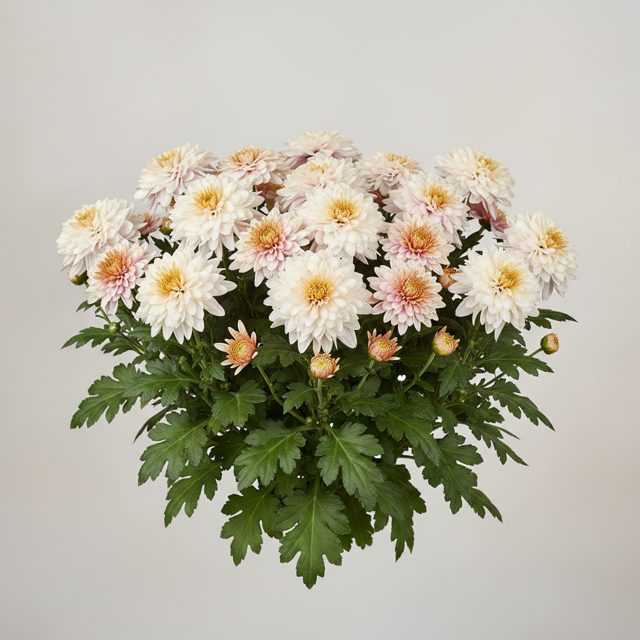
- Scientific name
- Chrysanthemum morifolium
- Family
- Asteraceae
- Also known as
- Mum, Dendranthema
- Category
- Flowers
- Care difficulty
- Easy
- Pet safety
- Toxic to pets
How to care for chrysanthemum
- Light: Requires full sun, at least 6 hours of direct sunlight daily, for best blooming. Some afternoon shade is tolerated in hot climates.
- Water: Keep the soil consistently moist, especially during active growth and flowering. Avoid letting the soil dry out completely.
- Soil: Prefers well-draining, fertile soil rich in organic matter. A slightly acidic to neutral pH is ideal.
- Temperature: Most garden chrysanthemums are hardy in zones 5-9. They prefer cooler temperatures for blooming, around 60-70°F (15-21°C).
- Humidity: Average household humidity is usually sufficient. Good air circulation helps prevent fungal diseases.
- Fertilizer: Feed every 2-4 weeks during the growing season until buds show color. Use a balanced fertilizer.
- Propagation: Propagate by dividing established clumps in spring or by taking 4-6 inch stem cuttings in early summer. Root in moist soil.
Is chrysanthemum toxic to pets?
Not pet-safe. Toxic to cats and dogs, causing vomiting, diarrhea, hypersalivation, and loss of coordination. See our guide to toxic plants for cats and dogs.
Common problems
- Powdery mildew: Improve air circulation and avoid overhead watering; treat with a fungicide if necessary.
- Aphids: Spray with insecticidal soap or horticultural oil, or wash off with a strong stream of water.
Did you know?
In Japan, the chrysanthemum is a symbol of the Emperor and the Imperial family, and there's a National Chrysanthemum Day called 'Kiku no Sekku'.
Let PlantBetter help
Snap a photo with PlantBetter to confirm your plant is a chrysanthemum, spot problems early and get care reminders tailored to your home.