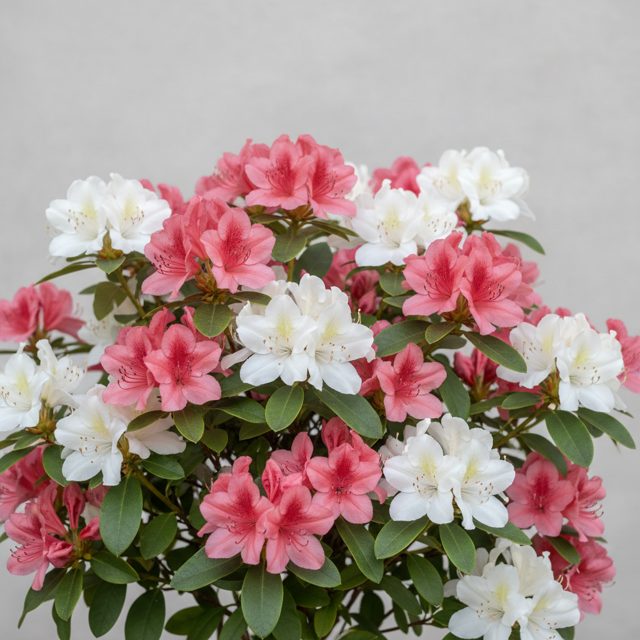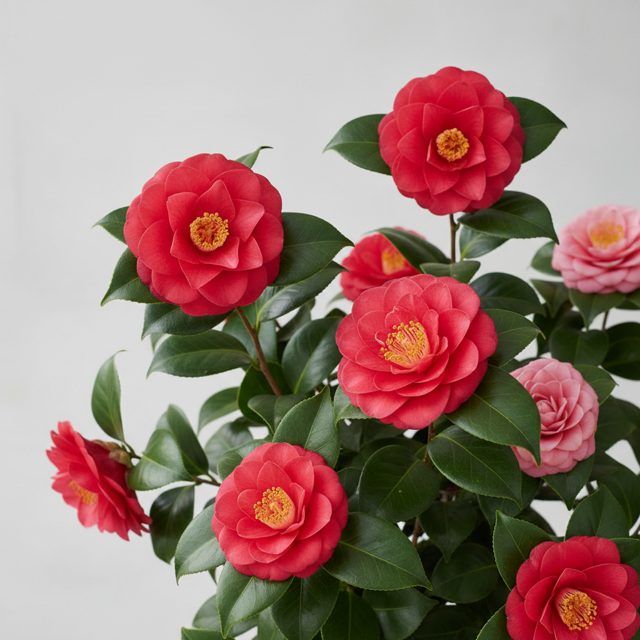
- Scientific name
- Camellia japonica
- Family
- Theaceae
- Also known as
- Japanese Camellia, Tsubaki
- Category
- Flowers
- Care difficulty
- Moderate
- Pet safety
- Non-toxic to cats and dogs
How to care for camellia
- Light: Prefers partial shade, especially protection from hot afternoon sun. Too much shade can reduce flowering, while too much sun can scorch leaves.
- Water: Keep soil consistently moist, especially during dry periods and active growth. Avoid letting the plant dry out completely.
- Soil: Requires acidic, well-draining soil rich in organic matter. A pH between 5.5 and 6.5 is ideal.
- Temperature: Most common camellias (like C. japonica) are hardy in zones 7-9, thriving in mild winters and warm summers. Protect from extreme cold.
- Humidity: Benefits from moderate to high humidity. Mulching helps retain soil moisture and humidity.
- Fertilizer: Feed with an acid-forming fertilizer formulated for camellias/azaleas after flowering in spring. Avoid fertilizing in late summer or fall.
- Propagation: Propagate by semi-hardwood cuttings taken in late summer. Dip in rooting hormone and place in a moist, well-draining medium.
Is camellia toxic to pets?
Pet-safe. Non-toxic to cats, dogs, and humans. See our guide to toxic plants for cats and dogs.
Common problems
- Bud drop: Caused by inconsistent watering, sudden temperature changes, or low humidity; maintain stable conditions.
- Yellowing leaves (chlorosis): Indicates iron deficiency or alkaline soil; use an acid-forming fertilizer or iron chelate.
Did you know?
The tea plant (Camellia sinensis) is a species of camellia, and all tea, including black, green, and oolong, comes from this plant.
Let PlantBetter help
Snap a photo with PlantBetter to confirm your plant is a camellia, spot problems early and get care reminders tailored to your home.