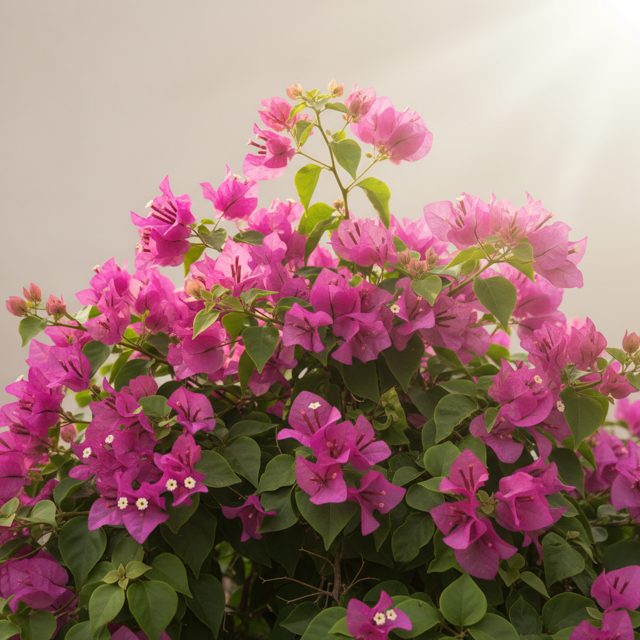
- Scientific name
- Bougainvillea spectabilis
- Family
- Nyctaginaceae
- Also known as
- Paper Flower
- Category
- Flowers
- Care difficulty
- Moderate
- Pet safety
- Toxic to pets
How to care for bougainvillea
- Light: Requires full sun, at least 6 hours of direct sunlight daily, to bloom prolifically. Less sun will result in sparse flowering.
- Water: Once established, it is drought-tolerant. Water deeply when the top few inches of soil are dry, but allow soil to dry out between waterings to encourage blooming.
- Soil: Prefers well-draining, slightly acidic to neutral soil. It is adaptable but dislikes constantly wet roots.
- Temperature: Thrives in warm to hot temperatures, ideally 70-85°F (21-29°C). It is sensitive to frost and grown as an annual or container plant in colder climates.
- Humidity: Tolerates average to high humidity. Good air circulation is beneficial.
- Fertilizer: Fertilize every 2-4 weeks during the growing season with a balanced, high-phosphorus fertilizer to encourage blooms. Reduce feeding in winter.
- Propagation: Propagate by semi-hardwood cuttings taken in late spring or early summer. Rooting hormone is often beneficial.
Is bougainvillea toxic to pets?
Not pet-safe. Toxic to cats and dogs, causing mild digestive upset like vomiting or diarrhea, and skin irritation from sap. See our guide to toxic plants for cats and dogs.
Common problems
- Lack of blooms: Ensure full sun exposure, avoid over-fertilizing with nitrogen, and allow soil to dry out slightly between waterings.
- Aphids or whiteflies: Spray with insecticidal soap or horticultural oil, or hose down plants with water to dislodge pests.
Did you know?
The vibrant 'petals' of bougainvillea are actually modified leaves called bracts, which surround the tiny, true white flowers.
Let PlantBetter help
Snap a photo with PlantBetter to confirm your plant is a bougainvillea, spot problems early and get care reminders tailored to your home.