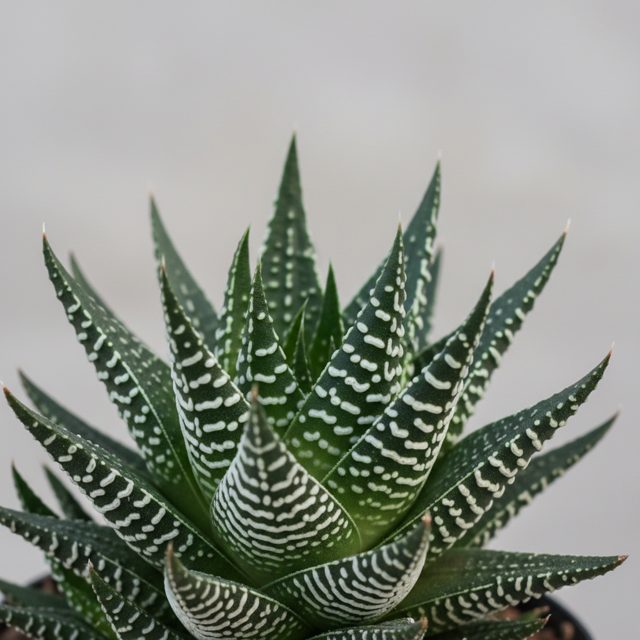
- Scientific name
- Haworthiopsis attenuata (formerly Haworthia attenuata)
- Family
- Asphodelaceae
- Also known as
- Zebra Haworthia, Zebra Cactus
- Category
- Succulents & Cacti
- Care difficulty
- Easy
- Pet safety
- Non-toxic to cats and dogs
How to care for zebra plant haworthia
- Light: Prefers bright, indirect light; some direct morning sun is fine. Too much direct sun can scorch leaves, while too little can lead to etiolation.
- Water: Water thoroughly when the soil is completely dry, typically every 3-4 weeks. Reduce watering significantly in winter.
- Soil: Requires a very well-draining succulent or cactus potting mix. Good aeration is crucial to prevent root rot.
- Temperature: Thrives in average room temperatures of 65-80°F (18-27°C). Protect from cold drafts and temperatures below 50°F (10°C).
- Humidity: Tolerates average to low indoor humidity; does not require special humidity conditions.
- Fertilizer: Fertilize very sparingly, once a year in spring with a highly diluted liquid succulent fertilizer.
- Propagation: Easily propagated by carefully removing offsets ('pups') from the base of the mother plant. Allow the offset to callus before planting in its own pot.
Is zebra plant haworthia toxic to pets?
Pet-safe. Non-toxic to cats, dogs, and humans. See our guide to toxic plants for cats and dogs.
Common problems
- Brown or shriveled leaf tips: Often caused by underwatering or too much direct sun; adjust watering frequency or move to a shadier spot.
- Mushy leaves/rot: Indicates overwatering; reduce watering and ensure proper drainage.
Did you know?
The characteristic white stripes on the leaves are actually tubercles, which are small, raised bumps that give the plant its unique texture and common name.
Let PlantBetter help
Snap a photo with PlantBetter to confirm your plant is a zebra plant haworthia, spot problems early and get care reminders tailored to your home.