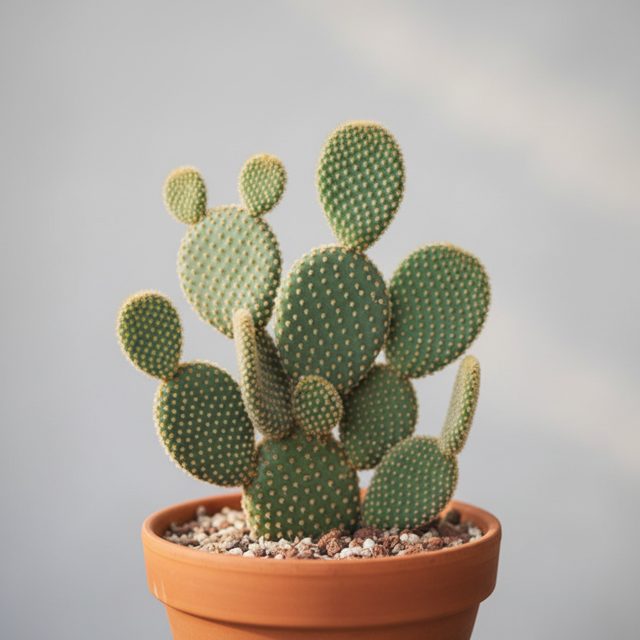
- Scientific name
- Opuntia microdasys
- Family
- Cactaceae
- Also known as
- Polka-Dot Cactus, Angel's Wings
- Category
- Succulents & Cacti
- Care difficulty
- Easy
- Pet safety
- Toxic to pets
How to care for bunny ears cactus
- Light: Requires bright, direct sunlight for at least 6 hours daily. Can tolerate some partial shade but may grow leggy.
- Water: Water thoroughly when the soil is completely dry to the touch, usually every 2-4 weeks. Keep drier in winter.
- Soil: Needs a very well-draining cactus or succulent potting mix. Amend with extra perlite or pumice if needed.
- Temperature: Prefers warm temperatures between 70-100°F (21-38°C). Protect from frost, as it is not cold-hardy.
- Humidity: Tolerates low humidity, typical of desert environments.
- Fertilizer: Fertilize sparingly, once or twice during the growing season (spring/summer) with a diluted low-nitrogen cactus fertilizer.
- Propagation: Easily propagated from stem pads; simply twist off a pad, allow it to callus for a few days, and plant in dry soil.
Is bunny ears cactus toxic to pets?
Not pet-safe. Not considered chemically toxic, but its tiny, barbed glochids can cause skin irritation, itching, and pain if embedded in skin or ingested. See our guide to toxic plants for cats and dogs.
Common problems
- Shriveling pads: Indicates underwatering; increase watering frequency slightly.
- Soft, discolored pads: Caused by overwatering and rot; allow soil to dry completely between waterings and ensure good drainage.
Did you know?
Unlike many cacti, Opuntia microdasys does not have large, sharp spines, but its glochids are notorious for being difficult to remove and irritating.
Let PlantBetter help
Snap a photo with PlantBetter to confirm your plant is a bunny ears cactus, spot problems early and get care reminders tailored to your home.