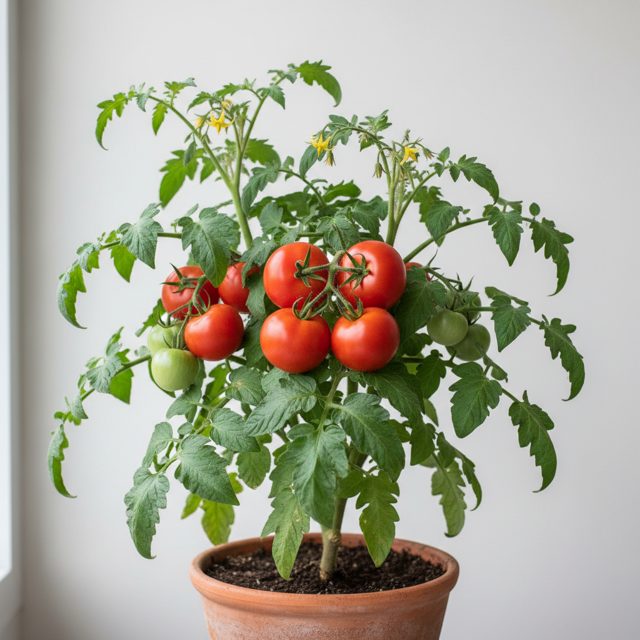
- Scientific name
- Solanum lycopersicum
- Family
- Solanaceae
- Also known as
- Love Apple, Garden Tomato
- Category
- Vegetables, Fruits & Herbs
- Care difficulty
- Moderate
- Pet safety
- Toxic to pets
How to care for tomato
- Light: Requires full sun, at least 6-8 hours per day, for optimal fruit production. More sun generally means more fruit.
- Water: Keep soil consistently moist, especially during flowering and fruiting. Deep, infrequent watering is better than shallow, frequent watering.
- Soil: Thrives in well-draining, fertile, slightly acidic soil rich in organic matter. Amend with compost before planting.
- Temperature: Prefers warm temperatures between 65-85°F (18-29°C). Very sensitive to frost and hot temperatures above 90°F (32°C) can hinder fruit set.
- Humidity: Tolerates average humidity. High humidity coupled with poor air circulation can promote fungal diseases.
- Fertilizer: Feed with a balanced fertilizer at planting, then switch to a fertilizer higher in phosphorus and potassium once fruits begin to set. Fertilize every 2-4 weeks.
- Propagation: Primarily propagated from seed. Stem cuttings can also be rooted in water or soil.
Is tomato toxic to pets?
Not pet-safe. Tomato plants (leaves, stems, unripe fruit) are toxic to cats, dogs, and humans due to solanine, causing gastrointestinal upset and neurological symptoms if ingested. See our guide to toxic plants for cats and dogs.
Common problems
- Blossom end rot: Ensure consistent soil moisture and adequate calcium uptake by watering deeply and evenly. Avoid fluctuations in soil moisture.
- Pest infestations (e.g., hornworms, aphids): Regularly inspect plants, handpick larger pests, or use organic insecticides like neem oil or insecticidal soap for smaller infestations.
Did you know?
Botanically, a tomato is a fruit (a berry), but it is legally and culinarily considered a vegetable.
Let PlantBetter help
Snap a photo with PlantBetter to confirm your plant is a tomato, spot problems early and get care reminders tailored to your home.