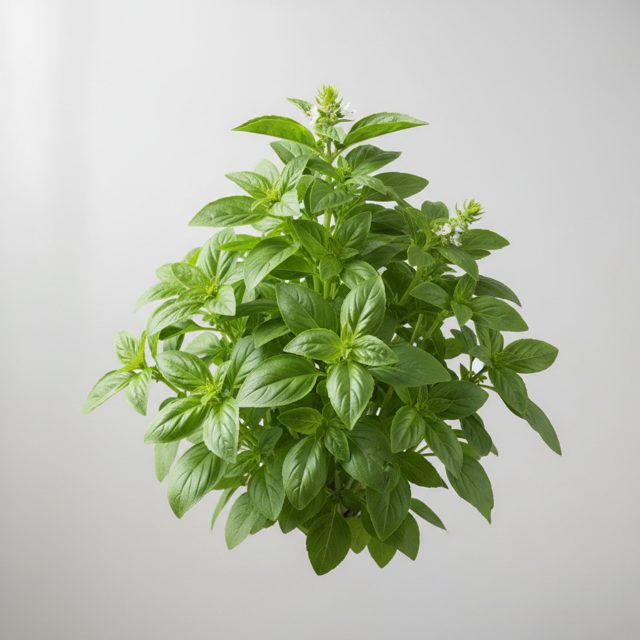
- Scientific name
- Ocimum basilicum
- Family
- Lamiaceae
- Also known as
- Sweet Basil, Great Basil
- Category
- Vegetables, Fruits & Herbs
- Care difficulty
- Easy
- Pet safety
- Non-toxic to cats and dogs
How to care for basil
- Light: Requires full sun, at least 6-8 hours daily, for best growth and flavor. It can tolerate some partial shade in very hot climates.
- Water: Keep soil consistently moist but not waterlogged. Water deeply when the top inch of soil feels dry, especially during hot periods.
- Soil: Thrives in well-draining, fertile soil rich in organic matter. A slightly acidic to neutral pH is ideal.
- Temperature: Prefers warm temperatures above 65°F (18°C). Very sensitive to cold and frost.
- Humidity: Tolerates average humidity. Good air circulation is important.
- Fertilizer: Generally not a heavy feeder; a light application of balanced liquid fertilizer every 3-4 weeks is sufficient if soil is poor. Healthy soil usually provides enough nutrients.
- Propagation: Easily propagated from seed or by rooting stem cuttings in water or moist soil. Pinching off flower stalks encourages bushier growth.
Is basil toxic to pets?
Pet-safe. Basil is considered non-toxic to cats, dogs, and humans. See our guide to toxic plants for cats and dogs.
Common problems
- Bolting (flowering prematurely): Pinch off flower buds as soon as they appear to encourage leaf production and extend the harvest. Ensure consistent watering.
- Leaf spot diseases: Improve air circulation, avoid overhead watering, and remove affected leaves. Plant resistant varieties if available.
Did you know?
Basil was once associated with hate and poverty in some cultures, while in others, it symbolized love and fertility.
Let PlantBetter help
Snap a photo with PlantBetter to confirm your plant is a basil, spot problems early and get care reminders tailored to your home.