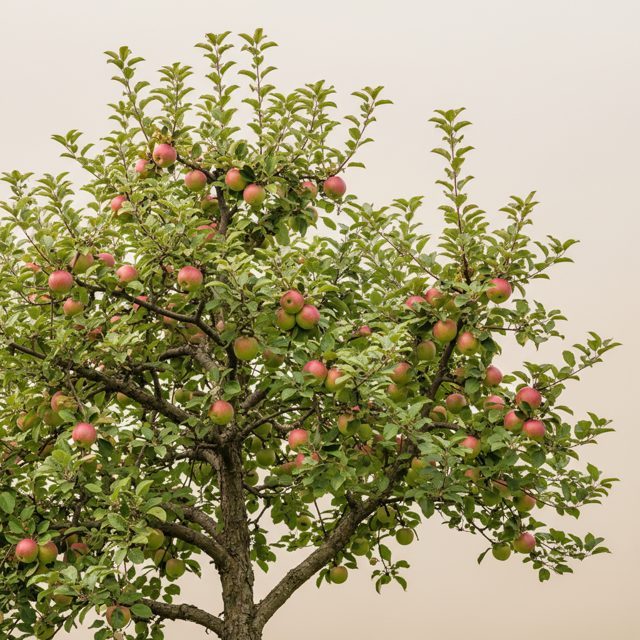
- Scientific name
- Malus domestica
- Family
- Rosaceae
- Also known as
- Crabapple
- Category
- Vegetables, Fruits & Herbs
- Care difficulty
- Moderate
- Pet safety
- Toxic to pets
How to care for apple tree
- Light: Apple trees need full sun, at least 6-8 hours of direct sunlight per day, for optimal fruit set and quality.
- Water: Water newly planted trees regularly; established trees need deep watering during dry periods, especially when fruiting.
- Soil: They prefer well-draining, fertile loam with a slightly acidic to neutral pH (6.0-7.0).
- Temperature: Apple trees are temperate zone plants, requiring a period of cold dormancy (chill hours) for fruit production.
- Humidity: Moderate humidity is generally suitable; good air circulation is important to prevent disease.
- Fertilizer: Fertilize in early spring with a balanced granular fertilizer or compost, adjusting based on soil test results.
- Propagation: Apple trees are typically propagated by grafting a desired scion onto a suitable rootstock to control size and disease resistance.
Is apple tree toxic to pets?
Not pet-safe. The seeds, stems, and leaves of apple trees contain cyanogenic glycosides which can release cyanide when metabolized; these parts are toxic to pets if ingested in significant amounts. See our guide to toxic plants for cats and dogs.
Common problems
- Codling moth (worms in apples): Use pheromone traps, spray with organic insecticides like Bt, or apply dormant oil in late winter.
- Apple scab (fungal disease): Plant resistant varieties, ensure good air circulation, prune effectively, and use fungicides if necessary.
Did you know?
There are more than 7,500 varieties of apples grown worldwide.
Let PlantBetter help
Snap a photo with PlantBetter to confirm your plant is a apple tree, spot problems early and get care reminders tailored to your home.