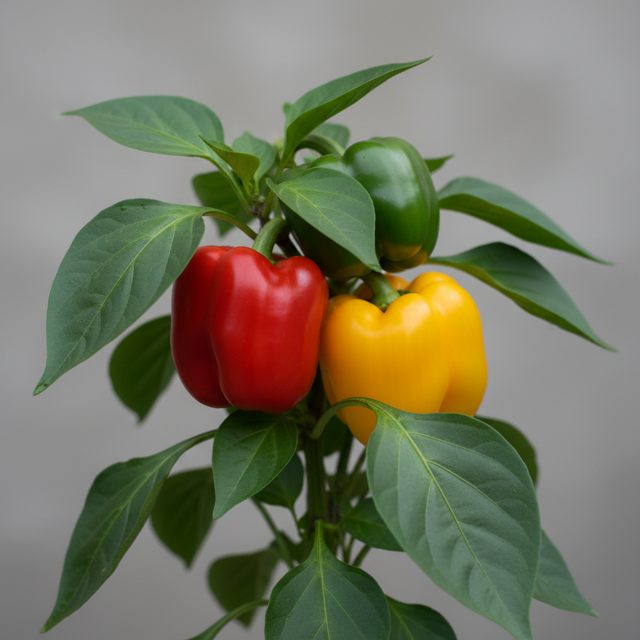
- Scientific name
- Capsicum annuum
- Family
- Solanaceae
- Also known as
- Sweet Pepper, Capsicum
- Category
- Vegetables, Fruits & Herbs
- Care difficulty
- Moderate
- Pet safety
- Non-toxic to cats and dogs
How to care for bell pepper
- Light: Needs full sun (at least 6-8 hours) for optimal fruit production. Insufficient light leads to poor yields.
- Water: Keep soil consistently moist but not waterlogged. Water deeply, especially during flowering and fruiting.
- Soil: Prefers rich, well-draining soil with a pH between 6.0 and 6.8. Amend with plenty of organic matter.
- Temperature: Thrives in warm temperatures, ideally between 70-80°F (21-27°C). They are sensitive to cold and require protection from frost.
- Humidity: Prefers moderate humidity. High humidity coupled with poor air circulation can lead to fungal diseases.
- Fertilizer: Benefits from a balanced fertilizer during early growth, then a fertilizer higher in phosphorus and potassium once flowering begins. Avoid excessive nitrogen.
- Propagation: Typically grown from seed, started indoors 8-10 weeks before the last frost date. Transplant carefully once soil temperatures are warm.
Is bell pepper toxic to pets?
Pet-safe. The ripe fruit (bell pepper) is non-toxic to cats, dogs, and humans. However, the leaves and stems contain solanine, which can cause mild digestive upset if ingested. See our guide to toxic plants for cats and dogs.
Common problems
- Blossom end rot: Ensure consistent soil moisture and consider adding calcium to the soil if deficient; avoid rapid fluctuations in watering.
- Aphids or spider mites: Spray with insecticidal soap or neem oil, ensuring good coverage on the undersides of leaves.
Did you know?
Bell peppers are technically fruits, specifically berries, but are generally treated as vegetables in culinary contexts.
Let PlantBetter help
Snap a photo with PlantBetter to confirm your plant is a bell pepper, spot problems early and get care reminders tailored to your home.