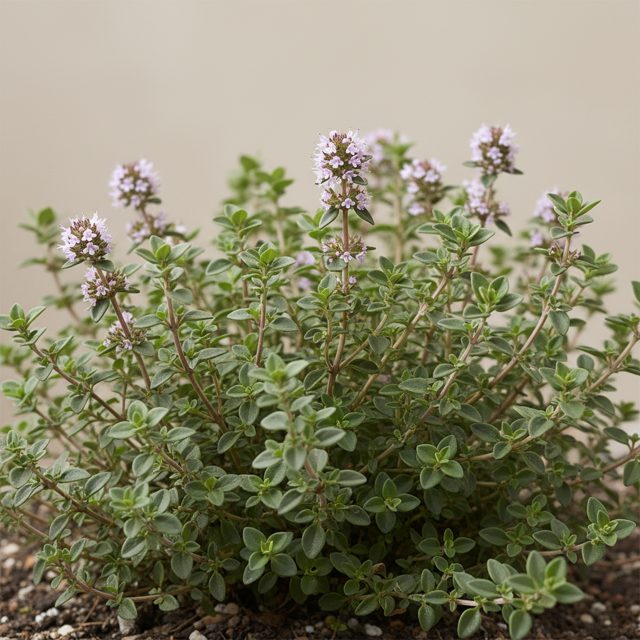
- Scientific name
- Thymus vulgaris
- Family
- Lamiaceae
- Also known as
- Common Thyme, Garden Thyme
- Category
- Vegetables, Fruits & Herbs
- Care difficulty
- Easy
- Pet safety
- Toxic to pets
How to care for thyme
- Light: Requires full sun, at least 6 hours daily, for best growth, flowering, and flavor. Partial shade can be tolerated in very hot climates.
- Water: Drought-tolerant once established. Water sparingly, allowing the soil to dry out completely between waterings. Overwatering is a common cause of failure.
- Soil: Thrives in well-draining, sandy, or rocky soil with a neutral to slightly alkaline pH. It dislikes heavy, wet soils.
- Temperature: Hardy in USDA zones 4-9. Tolerates heat and cold, but can benefit from winter protection in colder zones.
- Humidity: Prefers low to average humidity. Good air circulation is essential.
- Fertilizer: Requires minimal fertilizer; a light application of compost or a balanced slow-release fertilizer in spring is usually sufficient. Over-fertilizing reduces flavor.
- Propagation: Easily propagated from stem cuttings, by division, or by layering. Can also be grown from seed, though germination may be slow.
Is thyme toxic to pets?
Not pet-safe. Thyme is generally safe in small culinary amounts but can cause mild gastrointestinal upset in cats and dogs if consumed in large quantities. See our guide to toxic plants for cats and dogs.
Common problems
- Leggy growth and reduced vigor: Prune back plants regularly, especially after flowering, to encourage bushier growth and prevent woodiness. Ensure adequate sunlight.
- Root rot (due to excessive moisture): Ensure excellent soil drainage and avoid overwatering. Thyme prefers dry conditions.
Did you know?
Ancient Greeks associated thyme with courage and would bathe in thyme-infused water to boost their bravery.
Let PlantBetter help
Snap a photo with PlantBetter to confirm your plant is a thyme, spot problems early and get care reminders tailored to your home.