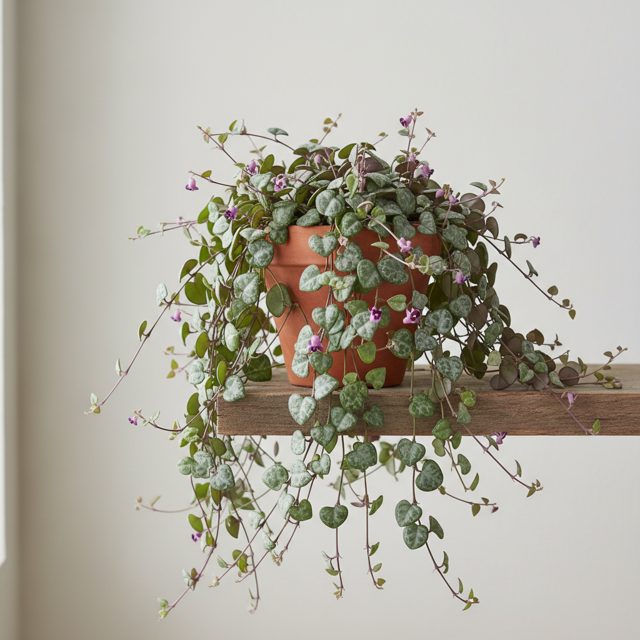
- Scientific name
- Ceropegia woodii
- Family
- Apocynaceae
- Also known as
- Rosary Vine, Chain of Hearts, Sweetheart Vine
- Category
- Succulents & Cacti
- Care difficulty
- Easy
- Pet safety
- Non-toxic to cats and dogs
How to care for string of hearts
- Light: Prefers bright, indirect light; some direct morning sun is beneficial. Too little light can cause sparse growth and pale leaves.
- Water: Water thoroughly when the top 1-2 inches of soil are dry to the touch. Allow the soil to dry out completely between waterings.
- Soil: Requires a well-draining succulent or cactus mix. A mix with perlite or pumice is ideal.
- Temperature: Thrives in average room temperatures of 65-75°F (18-24°C). Protect from temperatures below 50°F (10°C).
- Humidity: Tolerates average indoor humidity; does not require high humidity.
- Fertilizer: Fertilize sparingly, once a month during spring and summer with a balanced liquid fertilizer diluted to half strength.
- Propagation: Easily propagated from stem cuttings (with nodes and tubers), leaf cuttings, or tubers. Simply place cuttings on soil or in water.
Is string of hearts toxic to pets?
Pet-safe. Non-toxic to cats, dogs, and humans. See our guide to toxic plants for cats and dogs.
Common problems
- Shriveled leaves: Usually due to underwatering; increase watering frequency or soak the pot to rehydrate.
- Yellowing/mushy leaves or stem rot: Caused by overwatering; reduce watering, ensure proper drainage, and remove affected parts.
Did you know?
String of Hearts produces small, bead-like tubers along its stems, which can be harvested and replanted to create new plants.
Let PlantBetter help
Snap a photo with PlantBetter to confirm your plant is a string of hearts, spot problems early and get care reminders tailored to your home.