- Scientific name
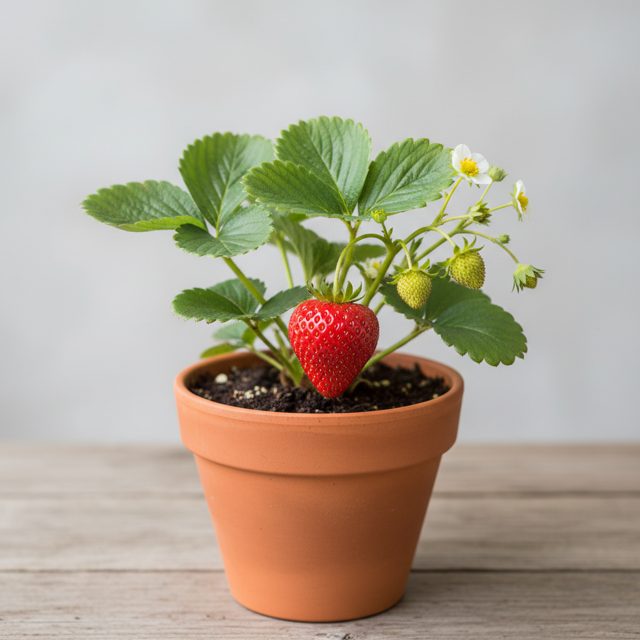
- Fragaria x ananassa
- Family
- Rosaceae
- Also known as
- Garden Strawberry
- Category
- Vegetables, Fruits & Herbs
- Care difficulty
- Easy
- Pet safety
- Non-toxic to cats and dogs
How to care for strawberry
- Light: Strawberries need at least 6-8 hours of direct sunlight daily for the best fruit production.
- Water: Keep the soil consistently moist, especially during flowering and fruiting, but avoid waterlogging.
- Soil: They prefer well-draining, slightly acidic soil rich in organic matter, with a pH of 5.5 to 6.5.
- Temperature: Strawberries are hardy plants, tolerating a range of temperatures but preferring moderate warmth for fruiting.
- Humidity: They generally do well in moderate humidity, but good air circulation is important to prevent fungal issues.
- Fertilizer: Fertilize in early spring and again after the harvest with a balanced granular fertilizer or compost.
- Propagation: Strawberries are easily propagated from runners, which are new plantlets that grow from the mother plant.
Is strawberry toxic to pets?
Pet-safe. Strawberries are non-toxic to cats, dogs, and humans. See our guide to toxic plants for cats and dogs.
Common problems
- Birds eating fruit: Cover plants with netting as soon as berries start to form color.
- Powdery mildew or other fungal diseases: Ensure good air circulation, avoid overhead watering, and remove affected leaves promptly.
Did you know?
The average strawberry has about 200 seeds on its outer surface.
Let PlantBetter help
Snap a photo with PlantBetter to confirm your plant is a strawberry, spot problems early and get care reminders tailored to your home.