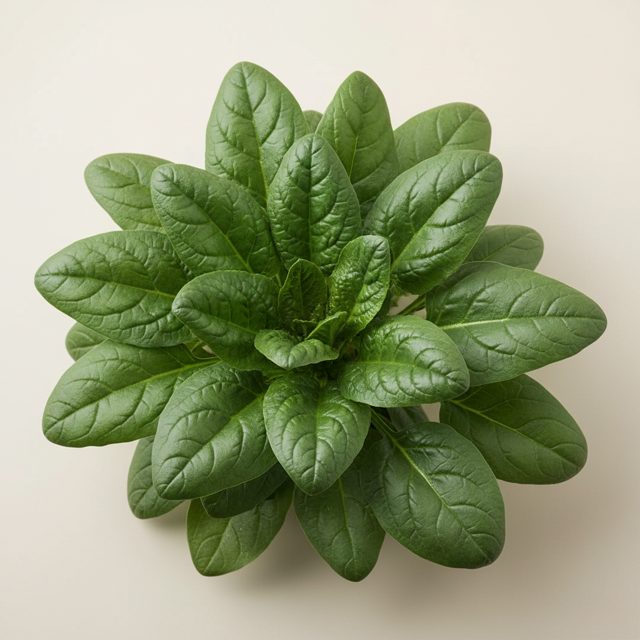
- Scientific name
- Spinacia oleracea
- Family
- Amaranthaceae
- Also known as
- Garden Spinach
- Category
- Vegetables, Fruits & Herbs
- Care difficulty
- Easy
- Pet safety
- Non-toxic to cats and dogs
How to care for spinach
- Light: Requires at least 3-6 hours of full sun per day; it tolerates partial shade, especially in warmer climates. Too much shade can lead to leggy growth.
- Water: Keep soil consistently moist but not waterlogged, particularly during dry spells. Inconsistent watering can lead to bolting.
- Soil: Prefers fertile, well-draining soil rich in organic matter, with a pH between 6.5 and 7.0. Spinach is sensitive to acidic soil.
- Temperature: Thrives in cool weather, ideally between 40-75°F (4-24°C). Temperatures above 80°F (27°C) will cause it to bolt quickly.
- Humidity: Average humidity is suitable. Good air circulation is important to prevent fungal diseases.
- Fertilizer: Benefits from nitrogen-rich fertilizer to promote leaf growth. Amend soil with compost or apply a balanced liquid feed every few weeks.
- Propagation: Best grown from seed directly sown in early spring or late summer. Plant seeds shallowly and thinly.
Is spinach toxic to pets?
Pet-safe. Generally considered non-toxic to cats, dogs, and humans in moderate amounts. High oxalate content may be a concern for pets with kidney issues if consumed in large quantities regularly. See our guide to toxic plants for cats and dogs.
Common problems
- Bolting (going to seed): Plant in cooler seasons, provide some afternoon shade, and choose slow-bolting varieties.
- Leaf miners: Remove and destroy affected leaves; use row covers to prevent adults from laying eggs.
Did you know?
Spinach was originally cultivated in ancient Persia and was introduced to China in the 7th century, where it became known as 'Persian vegetable'.
Let PlantBetter help
Snap a photo with PlantBetter to confirm your plant is a spinach, spot problems early and get care reminders tailored to your home.