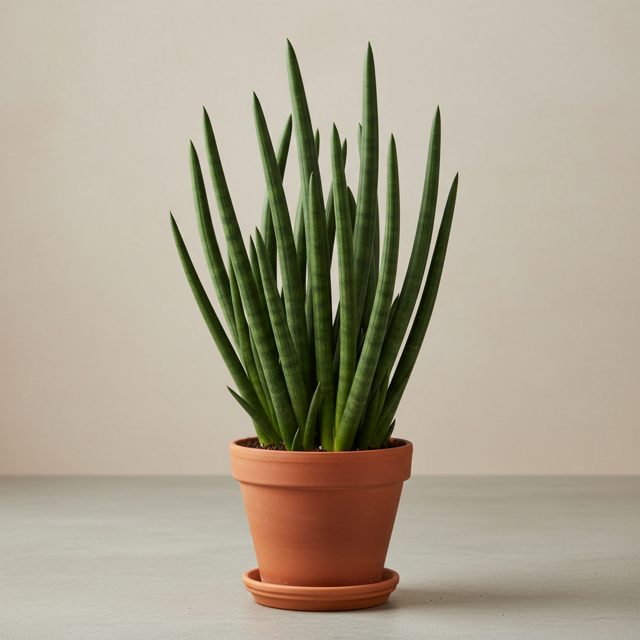
- Scientific name
- Sansevieria cylindrica (Dracaena angolensis)
- Family
- Asparagaceae
- Also known as
- African Spear, Cylindrical Snake Plant
- Category
- Succulents & Cacti
- Care difficulty
- Easy
- Pet safety
- Toxic to pets
How to care for snake plant cylindrica
- Light: Tolerates a wide range of light conditions, from low to bright, indirect light. Brighter light encourages faster growth.
- Water: Allow soil to dry out completely between waterings. It is highly drought-tolerant and very susceptible to overwatering.
- Soil: Prefers well-draining soil, such as a succulent or cactus mix. Good drainage is critical.
- Temperature: Thrives in average room temperatures between 65-85°F (18-29°C). Protect from temperatures below 50°F (10°C).
- Humidity: Tolerates average to low household humidity levels. High humidity is not required.
- Fertilizer: Feed sparingly once or twice during the growing season (spring/summer) with a diluted balanced liquid fertilizer. Avoid fertilizing in fall and winter.
- Propagation: Propagated from leaf cuttings (allow to callus before planting) or by dividing rhizomes. Cuttings may revert to green if variegated.
Is snake plant cylindrica toxic to pets?
Not pet-safe. Toxic to cats and dogs if ingested, potentially causing nausea, vomiting, and diarrhea due to saponins. See our guide to toxic plants for cats and dogs.
Common problems
- Root rot: Ensure excellent drainage and avoid overwatering; water only when the soil is completely dry.
- Mushy leaves: Usually a sign of severe overwatering; cut off affected parts and reduce watering significantly.
Did you know?
Its stiff, cylindrical leaves were traditionally used in Africa for fiber, which could be spun into bowstrings and other utilitarian items.
Let PlantBetter help
Snap a photo with PlantBetter to confirm your plant is a snake plant cylindrica, spot problems early and get care reminders tailored to your home.