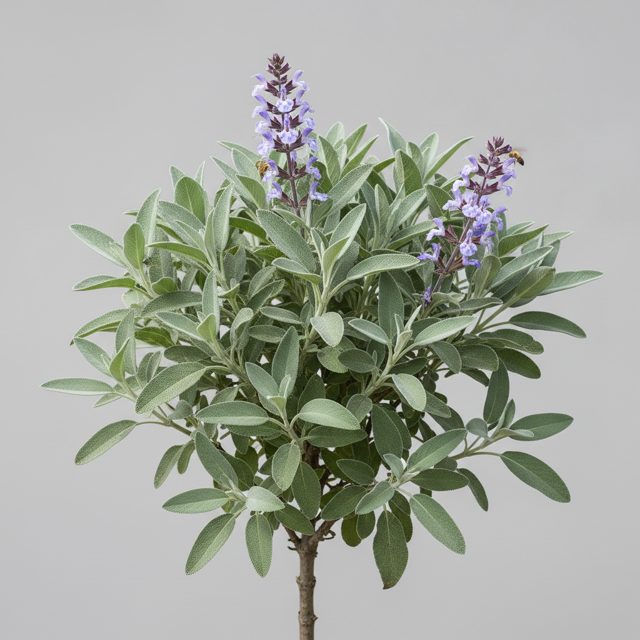
- Scientific name
- Salvia officinalis
- Family
- Lamiaceae
- Also known as
- Common Sage, Garden Sage
- Category
- Vegetables, Fruits & Herbs
- Care difficulty
- Easy
- Pet safety
- Toxic to pets
How to care for sage
- Light: Needs full sun (at least 6-8 hours) to thrive and develop its best flavor. It tolerates light shade.
- Water: Water regularly when young, but once established, it is drought tolerant. Allow soil to dry out completely between waterings.
- Soil: Prefers well-draining, sandy or loamy soil with a pH between 6.0 and 7.0. It does not tolerate wet feet.
- Temperature: Thrives in warm temperatures, but is quite hardy and can survive mild winters. Ideal range is 60-75°F (15-24°C).
- Humidity: Tolerates average to low humidity. Good air circulation is important to prevent fungal diseases.
- Fertilizer: Requires minimal fertilizer. A light feeding with compost or a balanced slow-release fertilizer in spring is usually enough.
- Propagation: Easily propagated from stem cuttings in spring or summer. Can also be grown from seed, though germination can be slow.
Is sage toxic to pets?
Not pet-safe. Can cause mild digestive upset, vomiting, and diarrhea in cats and dogs if ingested in large amounts due to essential oils. See our guide to toxic plants for cats and dogs.
Common problems
- Powdery mildew: Improve air circulation, avoid overhead watering, and remove affected leaves.
- Leggy growth: Prune regularly to encourage bushier growth and prevent legginess.
Did you know?
Ancient Romans believed sage had preservative qualities and used it to preserve meats, leading to its name derived from 'salvere' meaning 'to save' or 'to heal'.
Let PlantBetter help
Snap a photo with PlantBetter to confirm your plant is a sage, spot problems early and get care reminders tailored to your home.