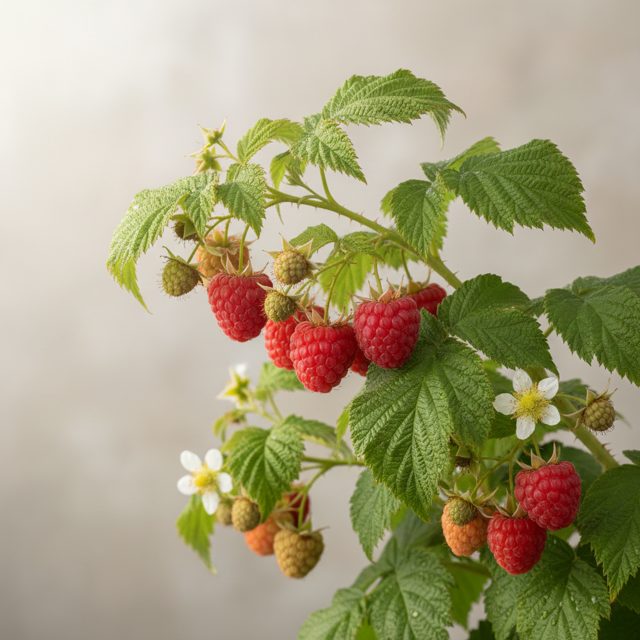
- Scientific name
- Rubus idaeus
- Family
- Rosaceae
- Also known as
- Red raspberry, Black raspberry
- Category
- Vegetables, Fruits & Herbs
- Care difficulty
- Moderate
- Pet safety
- Non-toxic to cats and dogs
How to care for raspberry
- Light: Requires full sun, at least 6-8 hours of direct sunlight daily, for maximum fruit production. Partial shade may reduce yield.
- Water: Keep soil consistently moist, especially during fruiting. Provide about 1 inch of water per week, more in hot, dry weather.
- Soil: Prefers well-draining, slightly acidic to neutral soil (pH 6.0-7.0) rich in organic matter. Avoid heavy clay or waterlogged areas.
- Temperature: Hardy plants, generally tolerant of cold winters. Thrive in temperate climates, with optimal growth between 60-75°F (15-24°C).
- Humidity: Normal outdoor humidity is acceptable. Ensure good air circulation to prevent fungal diseases, especially in humid conditions.
- Fertilizer: Apply a balanced granular fertilizer in early spring before new growth starts. Incorporate compost annually to enrich soil.
- Propagation: Propagate from suckers that emerge around the parent plant or by tip layering. Can also be started from bare-root canes.
Is raspberry toxic to pets?
Pet-safe. Raspberry fruits and leaves are generally safe for cats, dogs, and people. See our guide to toxic plants for cats and dogs.
Common problems
- Fungal diseases (e.g., anthracnose): Prune for good air circulation, remove infected canes promptly, and choose disease-resistant varieties.
- Small or crumbly fruit: Ensure adequate water, proper pollination (encourage bees), and prune canes correctly to avoid over-fruiting.
Did you know?
There are two main types of raspberries: 'floricane' (summer-bearing) which fruit on second-year canes, and 'primocane' (fall-bearing or everbearing) which fruit on first-year canes.
Let PlantBetter help
Snap a photo with PlantBetter to confirm your plant is a raspberry, spot problems early and get care reminders tailored to your home.