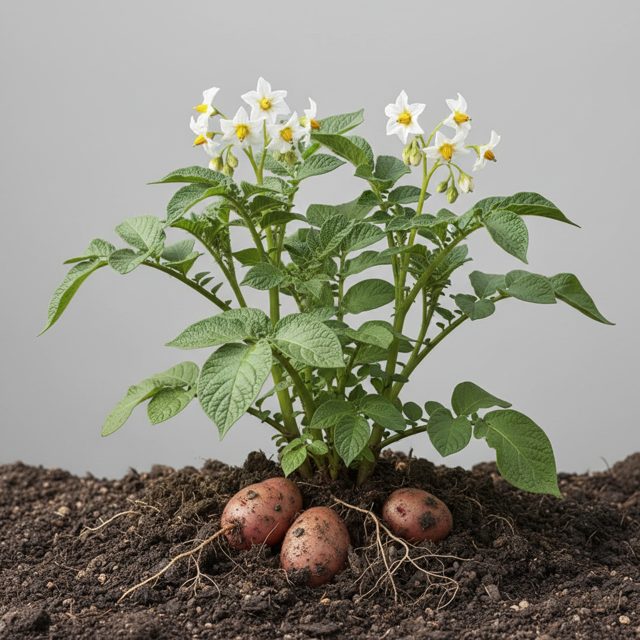
- Scientific name
- Solanum tuberosum
- Family
- Solanaceae
- Also known as
- Irish potato, White potato
- Category
- Vegetables, Fruits & Herbs
- Care difficulty
- Easy
- Pet safety
- Toxic to pets
How to care for potato
- Light: Requires full sun, meaning at least 6-8 hours of direct sunlight per day, for optimal tuber development. Too little light can result in small yields.
- Water: Keep soil consistently moist, especially during flowering and tuber formation, but avoid waterlogging. Water deeply once or twice a week, depending on weather and soil type.
- Soil: Prefers well-draining, loose, slightly acidic soil with a pH between 5.0 and 7.0. Amend with plenty of organic matter like compost.
- Temperature: Thrives in cool to moderate temperatures, ideally between 60-70°F (15-21°C) during the day. Protect from frost and extreme heat.
- Humidity: Normal outdoor humidity levels are generally sufficient. High humidity combined with poor air circulation can encourage fungal diseases.
- Fertilizer: Fertilize with a balanced fertilizer or one higher in phosphorus and potassium before planting. Side-dress with compost or a balanced fertilizer once plants emerge.
- Propagation: Propagate primarily from 'seed potatoes' which are cut pieces of tubers with at least one eye. Plant these pieces directly into the soil.
Is potato toxic to pets?
Not pet-safe. Raw potatoes, especially the green parts, skin, leaves, and sprouts, contain solanine which is toxic to cats, dogs, and people. See our guide to toxic plants for cats and dogs.
Common problems
- Green potatoes: Green parts of potatoes indicate exposure to light and increased solanine content; cut away all green sections before eating or discard heavily greened potatoes.
- Late blight: Plant resistant varieties, ensure good air circulation, and apply appropriate fungicides if necessary, removing and destroying infected plant material promptly.
Did you know?
The potato was the first vegetable grown in space, aboard the Space Shuttle Columbia in 1995.
Let PlantBetter help
Snap a photo with PlantBetter to confirm your plant is a potato, spot problems early and get care reminders tailored to your home.