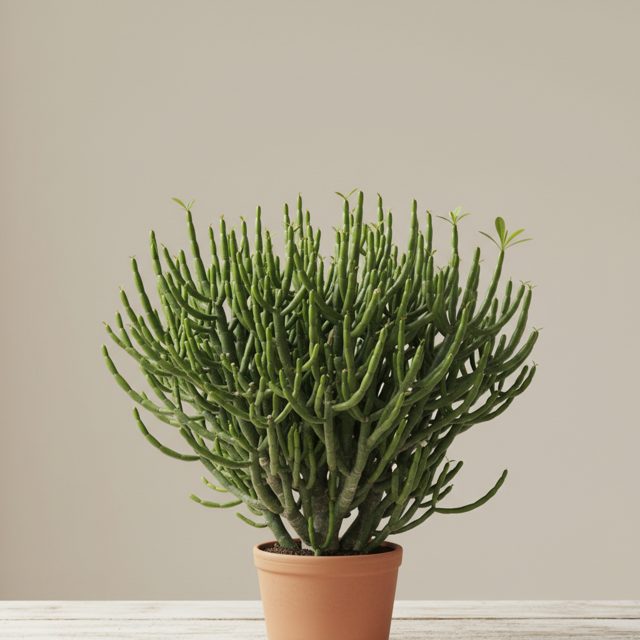
- Scientific name
- Euphorbia tirucalli
- Family
- Euphorbiaceae
- Also known as
- Milk Bush, Indian Tree Spurge
- Category
- Succulents & Cacti
- Care difficulty
- Easy
- Pet safety
- Toxic to pets
How to care for pencil cactus
- Light: Requires bright, direct sunlight for at least 6 hours daily; can tolerate partial sun but will be less dense. Etiolation occurs in low light.
- Water: Water thoroughly when the soil is completely dry, then allow it to dry out again before the next watering. It is drought-tolerant and sensitive to overwatering.
- Soil: Use a well-draining cactus or succulent mix, possibly with added perlite or sand. Good drainage is critical.
- Temperature: Prefers warm temperatures between 65-80°F (18-27°C). Protect from frost, as it is very sensitive to cold.
- Humidity: Tolerates average to low household humidity well. It thrives in dry conditions.
- Fertilizer: Feed sparingly with a balanced, diluted liquid fertilizer once or twice during the growing season (spring/summer). Do not fertilize in fall or winter.
- Propagation: Easily propagated from stem cuttings. Allow cut ends to callus for several days to a week before planting in dry, well-draining soil.
Is pencil cactus toxic to pets?
Not pet-safe. The milky white sap (latex) is highly irritating. It can cause skin irritation, temporary blindness if it gets in the eyes, and severe gastrointestinal upset if ingested by pets or humans. Always wear gloves when handling. See our guide to toxic plants for cats and dogs.
Common problems
- Wilting or yellowing stems: Check watering; either overwatering (leading to rot) or severe underwatering can cause this. Adjust watering schedule accordingly.
- Stems turning brown/black and mushy: This indicates rot, usually from overwatering. Cut away affected parts with sterile tools, ensuring gloves are worn due to sap, and repot in fresh, dry, well-draining soil.
Did you know?
In some parts of the world, especially Africa, the Pencil Cactus is used in traditional medicine and even explored for its potential as a biofuel.
Let PlantBetter help
Snap a photo with PlantBetter to confirm your plant is a pencil cactus, spot problems early and get care reminders tailored to your home.