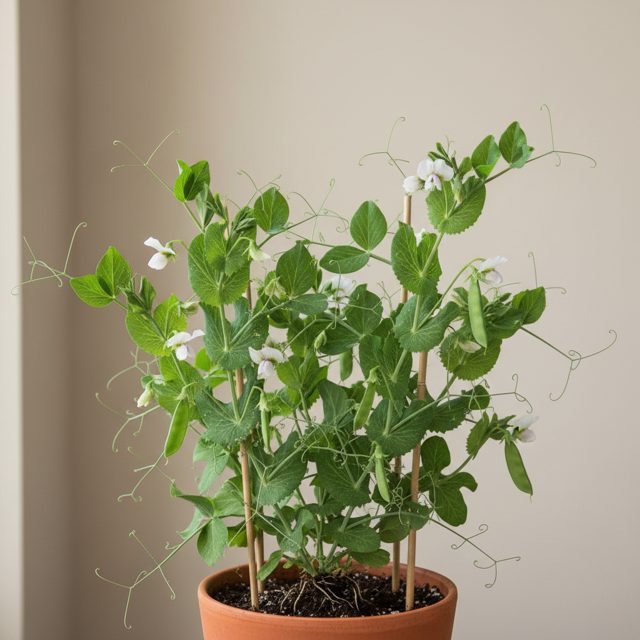
- Scientific name
- Pisum sativum
- Family
- Fabaceae
- Also known as
- Garden pea, Sweet pea (culinary)
- Category
- Vegetables, Fruits & Herbs
- Care difficulty
- Easy
- Pet safety
- Non-toxic to cats and dogs
How to care for pea
- Light: Requires full sun for at least 6 hours daily, but can tolerate some partial shade, especially in warmer climates. Good light promotes better pod fill.
- Water: Keep soil consistently moist, particularly when plants are flowering and forming pods. Avoid letting the soil dry out completely.
- Soil: Prefers well-draining, fertile soil rich in organic matter, with a pH between 6.0 and 7.5. Avoid heavy, compacted soils.
- Temperature: Cool-season crop, thrives in temperatures between 55-70°F (13-21°C). Plant in early spring as they tolerate light frost.
- Humidity: Normal outdoor humidity is suitable. Good air circulation is beneficial to prevent fungal issues in humid conditions.
- Fertilizer: Peas are nitrogen-fixers, so they generally don't need additional nitrogen. Amend soil with compost before planting.
- Propagation: Propagate by planting seeds directly into the garden in early spring. Soaking seeds overnight can aid germination.
Is pea toxic to pets?
Pet-safe. Garden peas (Pisum sativum) are generally safe for cats, dogs, and people. See our guide to toxic plants for cats and dogs.
Common problems
- Powdery mildew: Plant resistant varieties, ensure good air circulation, and water plants at the base to keep foliage dry.
- Aphids: Spray with a strong stream of water or insecticidal soap, or encourage natural predators like ladybugs.
Did you know?
There are three main types of peas: garden peas (shelled), snow peas (edible flat pods), and snap peas (edible round pods).
Let PlantBetter help
Snap a photo with PlantBetter to confirm your plant is a pea, spot problems early and get care reminders tailored to your home.