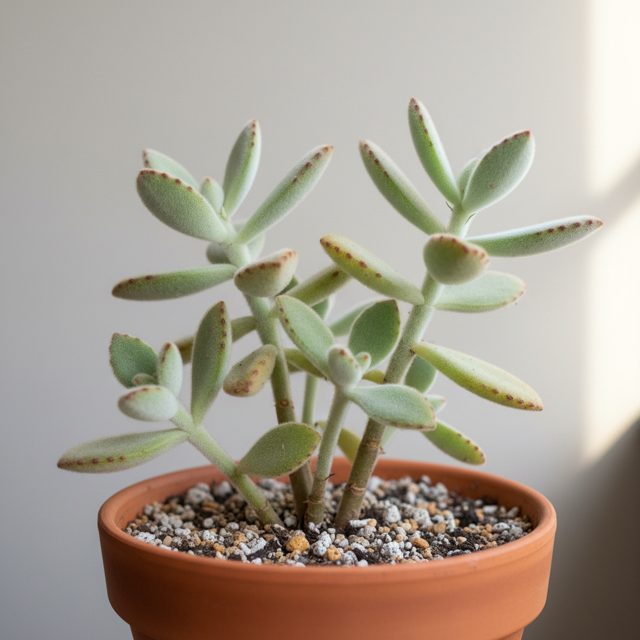
- Scientific name
- Kalanchoe tomentosa
- Family
- Crassulaceae
- Also known as
- Pussy Ears, Chocolate Soldier
- Category
- Succulents & Cacti
- Care difficulty
- Easy
- Pet safety
- Toxic to pets
How to care for panda plant
- Light: Prefers bright, indirect light. Direct sun for a few hours daily can enhance leaf coloration.
- Water: Allow soil to dry out completely between waterings. Water sparingly, especially in winter.
- Soil: Well-draining succulent or cactus mix is essential. Avoid heavy, moisture-retentive soils.
- Temperature: Thrives in average room temperatures, between 60-75°F (15-24°C). Protect from frost.
- Humidity: Tolerates average household humidity levels. Does not require high humidity.
- Fertilizer: Feed once or twice during the growing season (spring/summer) with a diluted succulent fertilizer. Do not fertilize in fall or winter.
- Propagation: Easily propagated from leaf cuttings or stem cuttings. Allow cuttings to callus for a few days before placing them in well-draining soil.
Is panda plant toxic to pets?
Not pet-safe. Toxic to cats and dogs if ingested, potentially causing vomiting, diarrhea, and cardiac issues. See our guide to toxic plants for cats and dogs.
Common problems
- Root rot: Ensure well-draining soil and avoid overwatering; water only when soil is completely dry.
- Leggy growth: Increase light exposure to prevent stretching and promote compact growth.
Did you know?
The soft, felt-like texture of its leaves is due to tiny hairs, which help the plant conserve water in its native arid environment.
Let PlantBetter help
Snap a photo with PlantBetter to confirm your plant is a panda plant, spot problems early and get care reminders tailored to your home.