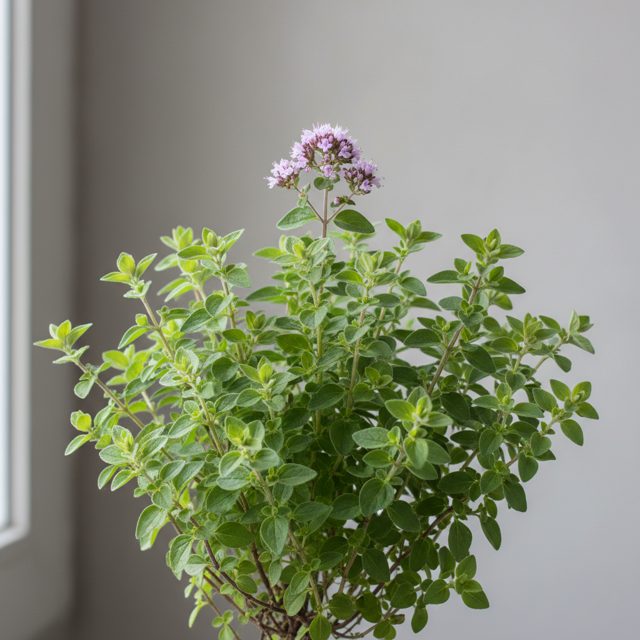
- Scientific name
- Origanum vulgare
- Family
- Lamiaceae
- Also known as
- Wild Marjoram, Common Oregano
- Category
- Vegetables, Fruits & Herbs
- Care difficulty
- Easy
- Pet safety
- Toxic to pets
How to care for oregano
- Light: Requires full sun (6-8 hours) for the best flavor and growth. It can tolerate some partial shade.
- Water: Water regularly until established, then it is drought tolerant. Allow the soil to dry out between waterings.
- Soil: Prefers well-draining, sandy or loamy soil with a pH between 6.0 and 8.0. Avoid heavy, waterlogged soils.
- Temperature: Thrives in warm, dry conditions, ideally 65-80°F (18-27°C). It is cold-hardy in many zones.
- Humidity: Tolerates average to low humidity. Good air circulation is important to prevent fungal issues.
- Fertilizer: Generally needs little fertilizer. A light application of compost in spring or a balanced liquid feed once a month is sufficient.
- Propagation: Can be propagated from seeds, cuttings, or by division. Cuttings are a reliable way to get established plants quickly.
Is oregano toxic to pets?
Not pet-safe. Can cause mild to moderate digestive upset, vomiting, and diarrhea in cats and dogs if ingested in large amounts. See our guide to toxic plants for cats and dogs.
Common problems
- Leggy growth and weak flavor: Ensure the plant receives ample full sun; insufficient light reduces essential oil production.
- Root rot: Improve soil drainage and avoid overwatering; oregano prefers drier conditions.
Did you know?
The word 'oregano' comes from the Greek words 'oros' (mountain) and 'ganos' (joy), meaning 'joy of the mountain'.
Let PlantBetter help
Snap a photo with PlantBetter to confirm your plant is a oregano, spot problems early and get care reminders tailored to your home.