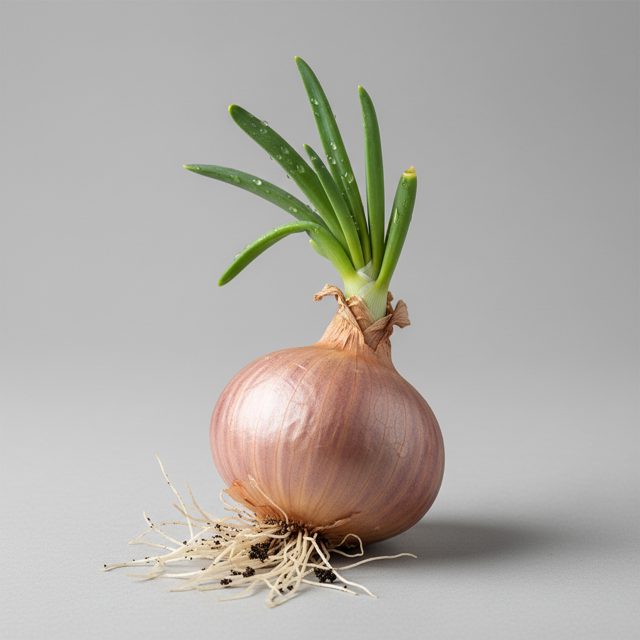
- Scientific name
- Allium cepa
- Family
- Amaryllidaceae
- Also known as
- Common onion, Bulb onion
- Category
- Vegetables, Fruits & Herbs
- Care difficulty
- Easy
- Pet safety
- Toxic to pets
How to care for onion
- Light: Requires full sun, at least 6-8 hours daily, for optimal bulb development. Insufficient light can lead to small, undeveloped bulbs.
- Water: Keep the soil consistently moist, especially during early growth and bulb formation. Reduce watering as bulbs mature to encourage curing.
- Soil: Prefers loose, well-draining, fertile soil with a pH of 6.0-7.0. Avoid heavy clay or rocky soils which can hinder bulb expansion.
- Temperature: Germinates best in cool weather (45-75°F / 7-24°C) and requires moderate temperatures for bulb development. Frost can damage young plants.
- Humidity: Normal outdoor humidity levels are fine. High humidity combined with poor air circulation can increase disease risk.
- Fertilizer: Amend soil with compost before planting. Fertilize with a balanced nitrogen-rich fertilizer every few weeks until bulb formation begins, then switch to a low-nitrogen, high-phosphorus/potassium formula.
- Propagation: Propagate from seeds, sets (small bulbs), or young plants. Sets are easiest for beginners and produce quicker harvests.
Is onion toxic to pets?
Not pet-safe. All parts of the onion plant are toxic to cats, dogs, and horses, causing damage to red blood cells. See our guide to toxic plants for cats and dogs.
Common problems
- Bolting (premature flowering): Plant varieties suited to your day length, avoid planting too early in cold temperatures, and ensure consistent watering to prevent stress.
- Onion maggots: Rotate crops, cover young plants with row covers, and remove any infested plants to break the life cycle of the pest.
Did you know?
The tearing sensation and eye irritation experienced when cutting onions is due to the release of syn-propanethial-S-oxide, a lachrymatory-factor synthase.
Let PlantBetter help
Snap a photo with PlantBetter to confirm your plant is a onion, spot problems early and get care reminders tailored to your home.