- Scientific name
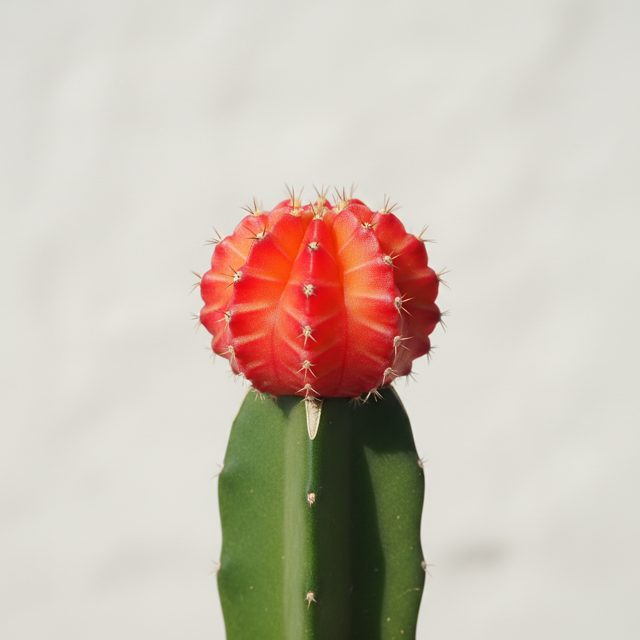
- Gymnocalycium mihanovichii 'Hibotan' grafted on Hylocereus undatus
- Family
- Cactaceae
- Also known as
- Hibotan Cactus, Starfish Cactus
- Category
- Succulents & Cacti
- Care difficulty
- Moderate
- Pet safety
- Non-toxic to cats and dogs
How to care for moon cactus
- Light: Prefers bright, indirect light. Avoid intense direct sunlight, which can scorch the colorful top cactus.
- Water: Water thoroughly when the soil is dry to the touch, then allow it to dry out completely before watering again. Reduce watering significantly in winter.
- Soil: Requires a very well-draining cactus or succulent mix. Good aeration is crucial to prevent root rot.
- Temperature: Thrives in average room temperatures, between 65-80°F (18-27°C). Protect from cold drafts and temperatures below 50°F (10°C).
- Humidity: Tolerates average to low household humidity levels. Does not require high humidity.
- Fertilizer: Fertilize sparingly during the growing season (spring and summer) with a diluted, low-nitrogen cactus fertilizer. Over-fertilization can harm the plant.
- Propagation: Propagation is complex as it is a grafted plant. The top colorful scion cannot survive on its own, and the rootstock is typically propagated from cuttings.
Is moon cactus toxic to pets?
Pet-safe. Generally considered non-toxic to cats, dogs, and people, though ingesting any plant material can cause mild stomach upset. See our guide to toxic plants for cats and dogs.
Common problems
- Root rot: Ensure excellent drainage and water only when the soil is completely dry; reduce winter watering.
- Scorched/discolored top: Move to a location with bright, indirect light, avoiding intense direct sunlight.
Did you know?
The colorful top part of the Moon Cactus, the 'scion', cannot produce its own chlorophyll, relying entirely on the green bottom part, the 'rootstock', for sustenance.
Let PlantBetter help
Snap a photo with PlantBetter to confirm your plant is a moon cactus, spot problems early and get care reminders tailored to your home.