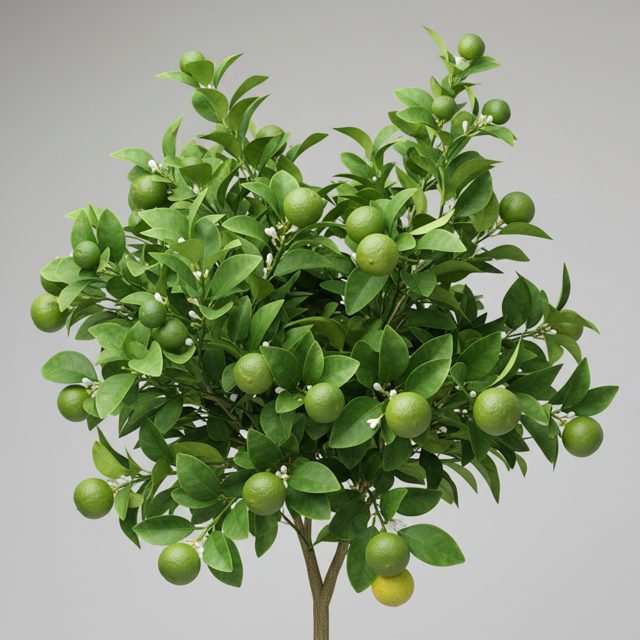
- Scientific name
- Citrus aurantiifolia
- Family
- Rutaceae
- Also known as
- Key Lime, Persian Lime
- Category
- Vegetables, Fruits & Herbs
- Care difficulty
- Moderate
- Pet safety
- Toxic to pets
How to care for lime tree
- Light: Lime trees need full sun, ideally 8-12 hours of direct sunlight daily, to produce abundant fruit.
- Water: Water thoroughly when the top 2-3 inches of soil are dry, ensuring good drainage to prevent root rot.
- Soil: Plant in well-draining, slightly acidic soil, rich in organic matter, with a pH of 6.0-7.0.
- Temperature: Limes are very sensitive to cold and thrive in warm temperatures above 60°F (15°C), requiring frost protection.
- Humidity: They prefer moderate to high humidity; consider misting indoors or using a pebble tray.
- Fertilizer: Use a specialized citrus fertilizer 3-4 times per year, especially during active growth and fruiting.
- Propagation: Lime trees are often propagated by grafting onto disease-resistant rootstock, or by air layering.
Is lime tree toxic to pets?
Not pet-safe. The essential oils (limonene and linalool) in the plant are toxic to cats and dogs, causing symptoms like vomiting, diarrhea, and depression if ingested. See our guide to toxic plants for cats and dogs.
Common problems
- Scale insects or spider mites: Treat with horticultural oil or insecticidal soap, ensuring thorough coverage, especially on undersides of leaves.
- Yellowing leaves (chlorosis): Check for nutrient deficiencies (e.g., iron, zinc) or improper soil pH; apply appropriate amendments or fertilizer.
Did you know?
Key limes are smaller, more aromatic, and have more seeds than common Persian limes.
Let PlantBetter help
Snap a photo with PlantBetter to confirm your plant is a lime tree, spot problems early and get care reminders tailored to your home.