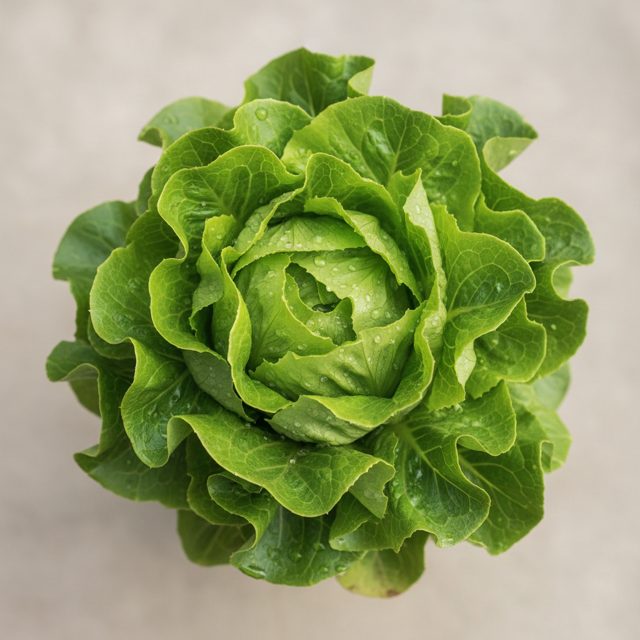
- Scientific name
- Lactuca sativa
- Family
- Asteraceae
- Also known as
- Garden Lettuce, Leaf Lettuce
- Category
- Vegetables, Fruits & Herbs
- Care difficulty
- Easy
- Pet safety
- Non-toxic to cats and dogs
How to care for lettuce
- Light: Requires at least 6 hours of full sun, but appreciates some afternoon shade in hot climates to prevent bolting. Can grow in partial shade.
- Water: Keep soil consistently moist but not waterlogged. Water deeply, especially during dry periods.
- Soil: Prefers rich, well-draining soil with a pH between 6.0 and 7.0. Incorporate plenty of organic matter.
- Temperature: Thrives in cool weather, ideally between 45-75°F (7-24°C). Hot temperatures cause it to bolt and turn bitter.
- Humidity: Average humidity is generally fine. Good air circulation helps prevent fungal issues like downy mildew.
- Fertilizer: Benefits from nitrogen-rich fertilizer. A balanced liquid feed every few weeks or a good layer of compost in the soil is usually sufficient.
- Propagation: Most commonly grown from seed, either direct-sown or started indoors for transplanting. Plant shallowly and thinly.
Is lettuce toxic to pets?
Pet-safe. Non-toxic to cats, dogs, and humans. It is a common and safe vegetable. See our guide to toxic plants for cats and dogs.
Common problems
- Bolting (going to seed): Plant heat-tolerant varieties, provide afternoon shade, or harvest frequently in warmer weather.
- Slugs and snails: Use bait, handpick pests, or create barriers around plants with diatomaceous earth or copper tape.
Did you know?
The ancient Egyptians cultivated lettuce over 6,000 years ago, not just for its leaves, but also for the oil extracted from its seeds.
Let PlantBetter help
Snap a photo with PlantBetter to confirm your plant is a lettuce, spot problems early and get care reminders tailored to your home.