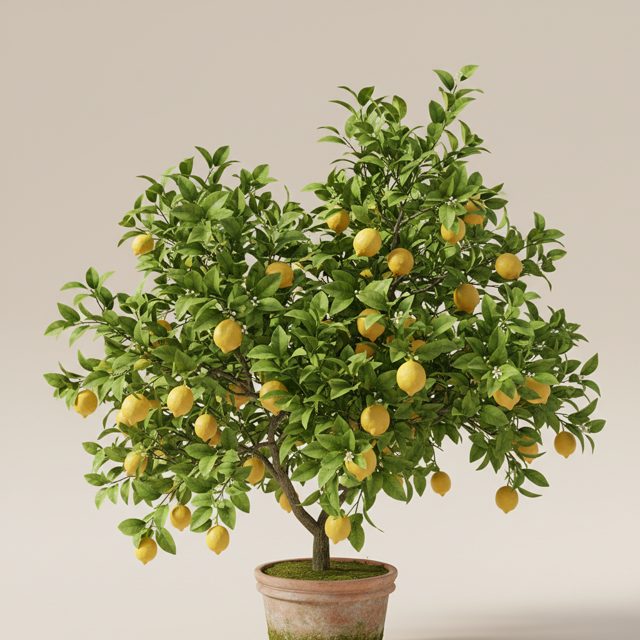
- Scientific name
- Citrus limon
- Family
- Rutaceae
- Also known as
- Eureka Lemon, Meyer Lemon
- Category
- Vegetables, Fruits & Herbs
- Care difficulty
- Moderate
- Pet safety
- Toxic to pets
How to care for lemon tree
- Light: Lemon trees require at least 8 hours of direct sunlight per day, ideally more, for best fruit production.
- Water: Water deeply when the top 2-3 inches of soil are dry, allowing the soil to dry out slightly between waterings.
- Soil: Use well-draining, slightly acidic to neutral soil, rich in organic matter, with a pH of 6.0-7.0.
- Temperature: They thrive in warm climates, ideally between 60-85°F (15-29°C), and need protection from frost.
- Humidity: Lemon trees prefer moderate to high humidity, especially indoors; misting can help.
- Fertilizer: Fertilize with a balanced citrus-specific fertilizer 3-4 times a year, following product instructions.
- Propagation: Lemon trees are commonly propagated by grafting onto rootstock, but can also be grown from seeds (though not true to type).
Is lemon tree toxic to pets?
Not pet-safe. The essential oils found in the plant (limonene and linalool) are toxic to cats and dogs if ingested, causing vomiting, diarrhea, depression, and photodermatitis. See our guide to toxic plants for cats and dogs.
Common problems
- Yellowing leaves (chlorosis): Check for nutrient deficiencies (especially iron or magnesium) or incorrect soil pH; ensure proper fertilization.
- Dropping leaves or fruit: This can be caused by inconsistent watering, extreme temperature changes, or pest infestations like scale or spider mites.
Did you know?
One lemon tree can produce up to 600 pounds of lemons in a year.
Let PlantBetter help
Snap a photo with PlantBetter to confirm your plant is a lemon tree, spot problems early and get care reminders tailored to your home.